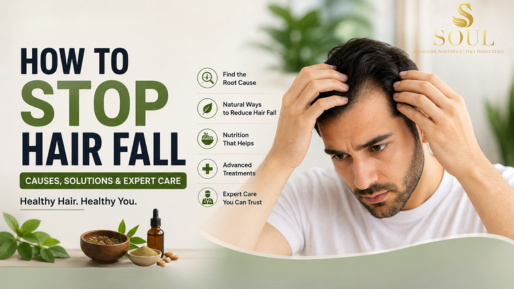
Hair fall is a common concern, but the best way to reduce it depends on why it is happening. Stress, illness, nutritional deficiencies, hormonal changes, genetics, certain hairstyles, and scalp conditions can all contribute. A sudden or significant increase in hair loss deserves professional evaluation rather than relying only on home remedies.
How to Stop Hair Fall: Causes, Natural Remedies, Treatments & Expert Care
Hair fall is a common concern, but there is no single solution that works for everyone. The best way to stop hair fall is to first identify what is causing it. Hair loss can be linked to genetics, stress, illness, nutritional deficiencies, hormonal changes, scalp conditions, certain medications, or damaging hair-care practices.
At Soul Aesthetic, the focus should begin with understanding your hair-loss pattern and possible contributing factors before deciding on the right approach. Early assessment can be important because some forms of hair loss may respond better when the underlying cause is identified and addressed sooner.
How to Stop Hair Fall?
To stop or reduce hair fall, first identify the cause, then follow the right treatment and hair-care approach. If hair fall is related to stress, illness, nutritional deficiency, harsh hair care, or another temporary trigger, addressing that cause may help reduce excessive shedding. However, conditions such as hereditary hair loss may require professional treatment to slow further loss or support regrowth.
You can start by:
- Following a gentle hair-care routine
- Eating a balanced diet with adequate nutrients
- Avoiding tight hairstyles and excessive heat or chemical damage
- Managing stress where possible
- Treating underlying scalp or medical conditions
- Seeking professional advice if hair fall is sudden, severe, patchy, or persistent
The most important point is simple: do not treat every type of hair fall in the same way.
Why Is Your Hair Falling Out?
Before searching for ways to stop hair fall, it is important to understand that normal hair shedding and actual hair loss are not always the same.
It is normal to lose some hair every day as part of the natural hair-growth cycle. However, noticeable thinning, a widening part, a receding hairline, bald patches, or excessive shedding may indicate an underlying issue that needs attention.
Hair fall can develop gradually or suddenly depending on the cause. For example, hereditary hair loss often develops gradually, while increased shedding can sometimes occur after illness, surgery, childbirth, significant weight loss, or major stress.
Common Causes of Hair Fall
1. Genetics
Hereditary hair loss is one of the most common causes of gradual thinning in both men and women. In men, it may appear as a receding hairline or thinning around the crown. In women, it may appear as overall thinning or a widening hair part.
Because genetic hair loss can progress over time, early assessment can help determine the most appropriate management approach.
2. Stress and Illness
Physical or emotional stress can sometimes trigger increased shedding.
This may happen after:
- A high fever
- Surgery
- Recovery from an illness
- Significant weight loss
- Childbirth
- A major stressful event
This type of shedding can occur several months after the triggering event and may improve once the body readjusts, although individual recovery varies.
3. Nutritional Deficiencies
Your hair needs adequate nutrients to support normal growth.
Low levels of certain nutrients, including iron, protein, zinc, or other nutritional deficiencies, can contribute to noticeable hair loss in some people. However, taking large amounts of supplements without identifying a deficiency is not always helpful and, in some cases, excessive supplementation can worsen hair loss.
A balanced diet and professional assessment can help identify whether nutrition is playing a role.
4. Hormonal Changes
Hormonal changes can affect the hair-growth cycle.
For some people, hair loss may be associated with hormonal conditions or changes, including certain thyroid problems or other hormonal imbalances. Identifying and treating the underlying cause may help manage the associated hair loss.
5. Harsh Hair Care and Tight Hairstyles
Frequent chemical treatments, excessive heat, rough handling, and hairstyles that continuously pull on the hair can damage the hair or contribute to hair loss.
Tight ponytails, buns, braids, and other styles that place continuous tension on the scalp can lead to traction-related hair loss. Changing damaging hair-care practices early can help prevent further damage.
6. Scalp Conditions
Certain scalp conditions and infections can contribute to hair loss.
If you have itching, scaling, pain, inflammation, or sudden patchy hair loss, it is important to seek professional evaluation rather than assuming that the problem is caused by ordinary hair fall.
How to Stop Hair Fall Naturally
Natural methods can support healthy hair and reduce avoidable breakage, but they may not treat every cause of hair loss.
Here are practical steps that may help.
Follow a Gentle Hair-Care Routine
Hair that is already thinning or shedding can be more vulnerable to breakage.
Use a gentle shampoo that suits your scalp and follow with conditioner when appropriate. Avoid aggressively rubbing your hair with a towel, excessive brushing, and unnecessary heat styling. Dermatology guidance also recommends minimizing practices that can damage fragile hair.
Avoid Tight Hairstyles
Constant tension on the hair can damage the follicles over time.
Try to avoid regularly wearing hairstyles that pull tightly on your scalp. Looser styles can help reduce unnecessary tension.
Reduce Excessive Heat and Chemical Damage
Frequent heat styling, bleaching, relaxing, or other harsh chemical treatments can damage the hair shaft and contribute to breakage.
Give your hair time to recover and reduce unnecessary exposure to damaging treatments.
Manage Stress
Stress can affect the body in many ways, including the hair-growth cycle.
While stress management alone may not stop every type of hair loss, regular sleep, physical activity, relaxation, and a healthy routine can support overall well-being.
If you want more practical guidance, read our detailed guide on How to Reduce Hair Fall.
What Should You Eat to Stop Hair Fall?
Your diet can play an important role in overall hair health.
Focus on eating a balanced diet that provides adequate:
- Protein
- Iron
- Zinc
- Vitamins and other essential nutrients
Good food choices may include eggs, fish, lean meat, pulses, beans, leafy vegetables, nuts, seeds, fruits, and other nutrient-rich foods depending on your dietary preferences and requirements.
However, food alone cannot correct every cause of hair loss. If you have a significant nutritional deficiency or an underlying medical condition, you may need professional assessment and treatment.
For a detailed guide, read What to Eat to Stop Hair Fall Immediately.
Can Natural Methods Help With Hair Regrowth?
Natural hair care can support the health of your scalp and existing hair, but it is important to have realistic expectations.
If your hair fall is caused by a temporary trigger, such as a nutritional deficiency or a temporary shedding phase, addressing the underlying cause may support regrowth. However, hereditary hair loss and some other conditions may require specific medical treatment.
For more information about healthy approaches that may support hair growth, explore our guide on Natural Hair Regrowth.
Best Hair Care Routine to Reduce Hair Fall
A simple and consistent routine can help protect fragile hair and reduce avoidable breakage.
1. Choose a Gentle Shampoo
Use a shampoo that cleans your scalp without unnecessarily drying or irritating it.
2. Condition Your Hair
Conditioning can help reduce friction, breakage, and damage to the hair shaft.
3. Avoid Aggressive Towel Drying
Instead of rubbing your hair vigorously, gently pat or wrap it in a soft towel.
4. Be Gentle When Detangling
Avoid pulling through knots. Start from the ends and work upward carefully.
5. Limit Heat Styling
Reduce unnecessary use of straighteners, curling tools, and high-temperature blow-drying.
6. Avoid Tight Hairstyles
Choose hairstyles that do not constantly pull on your scalp.
These steps may help protect existing hair, but remember that reducing breakage is not always the same as treating hair loss from the follicle.
Medical Treatments for Hair Fall
The right treatment depends entirely on the cause of your hair loss.
A professional assessment may include a review of your medical history, diet, hair-care routine, family history, and scalp condition. In some cases, blood tests or other investigations may help identify an underlying cause.
Depending on the diagnosis, treatment options may include:
- Treatment for an underlying medical condition
- Prescription medication where medically appropriate
- Topical treatments such as minoxidil for certain types of hair loss
- Changes to damaging hair-care practices
- Treatment for scalp conditions
- Other specialist-recommended approaches
Minoxidil and prescription treatments are not suitable for everyone, and the correct treatment depends on factors such as the cause of hair loss, age, health, and individual circumstances.
At Soul Aesthetic, a hair-fall treatment plan should begin with understanding the individual’s concerns and possible causes rather than offering the same solution to every patient. To learn more, visit our Hair Fall Treatment page.
When Should You See a Hair Specialist?
You should consider professional evaluation if you notice:
- Sudden or excessive hair shedding
- A rapidly receding hairline
- Visible bald patches
- Noticeable scalp thinning
- Hair loss with itching, pain, or scaling
- Hair fall that continues for an extended period
- Hair loss following a medication or major health change
Early diagnosis can be important because different causes of hair loss require different approaches, and treatment can be more effective when the cause is identified correctly.
A professional may examine your scalp and hair, ask about your health and family history, and recommend further tests if necessary.
Why Do People Consider Soul Aesthetic for Hair Fall Treatment?
Choosing the right clinic is an important part of addressing persistent hair fall. Instead of focusing only on a single treatment or product, a proper approach should consider the possible cause, hair-loss pattern, scalp condition, and individual goals.
People considering Soul Aesthetic for hair fall concerns may look for:
- Personalized assessment: Understanding the pattern and possible causes of hair fall before recommending an approach.
- Individualized planning: Treatment recommendations based on individual concerns rather than a one-size-fits-all solution.
- Focus on scalp and hair health: Considering both the scalp condition and the health of existing hair.
- Realistic expectations: Understanding that hair growth and improvement can take time and that results vary depending on the underlying cause.
- Professional guidance: Helping patients understand appropriate treatment and aftercare.
- Convenient Mumbai location: For people seeking professional hair care and hair-fall guidance in Mumbai.
Conclusion
So, how to stop hair fall?
The most effective approach is to identify the cause and address it with the right combination of lifestyle changes, gentle hair care, nutrition, and professional treatment when necessary.
Simple steps such as avoiding tight hairstyles, reducing heat and chemical damage, eating a balanced diet, and treating nutritional deficiencies may help in appropriate cases. However, persistent, sudden, or progressive hair loss should not be ignored.
At Soul Aesthetic, the focus is on understanding your individual hair concerns and determining an appropriate path based on your hair-loss pattern, scalp condition, and overall needs.
If you are experiencing persistent hair fall, seeking professional guidance can help you understand what may be causing it and what treatment options may be appropriate.
FAQs
Q1. How can I stop hair fall immediately?
Ans. There is no single method that stops every type of hair fall immediately. The first step is identifying the cause and avoiding factors that may be damaging your hair.
Q2. Is it normal to lose hair every day?
Ans. Yes. Some daily shedding is normal as part of the natural hair-growth cycle. Noticeable thinning or excessive shedding may require evaluation.
Q3. Can stress cause hair fall?
Ans. Yes. Physical or emotional stress can contribute to excessive shedding in some people.
Q4. Can diet help reduce hair fall?
Ans. A balanced diet can support healthy hair, especially if a nutritional deficiency is contributing to hair loss. However, diet alone cannot treat every cause.
Q5. Can hair grow back after hair fall?
Ans. It depends on the cause. Some temporary forms of shedding may improve once the trigger is addressed, while other forms may require treatment.
Q6. When should I consult a specialist for hair fall?
Ans. Consider professional advice if hair loss is sudden, severe, patchy, persistent, or accompanied by scalp symptoms such as itching, pain, or scaling.