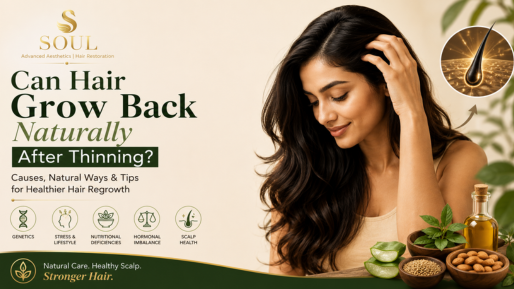
Can Hair Grow Back Naturally After Thinning?
Yes, hair can grow back naturally after thinning if the hair follicles are still active and healthy. In many cases, early-stage hair thinning caused by stress, nutritional deficiencies, hormonal imbalance, poor scalp health, or unhealthy lifestyle habits may improve with proper treatment and scalp care. However, successful natural hair regrowth depends on identifying the exact reason behind hair loss before starting any treatment.
At SOUL by Dr. Freedom, hair restoration treatments focus on improving scalp health, stimulating dormant follicles, and supporting long-term natural hair regrowth through scientifically guided and personalized treatment plans. Because every individual has different scalp conditions and hair concerns, customized diagnosis becomes extremely important for achieving healthier and natural-looking results.
What Causes Hair Thinning and Hair Loss?
Hair thinning usually develops gradually due to multiple internal and external factors. Therefore, understanding the root cause becomes important before starting any natural or medical hair restoration treatment.
Genetic Hair Loss
Genetics remains one of the most common reasons behind progressive hair thinning in both men and women. Individuals with hereditary hair loss often notice reduced density, receding hairlines, or thinning near the crown area over time. Moreover, genetic hair loss may continue progressing gradually if left untreated for long periods.
Therefore, early diagnosis and timely treatment often help maintain healthier follicle activity and slow down further thinning naturally.
Stress and Lifestyle Factors
Chronic stress directly affects hormone levels and disrupts the natural hair growth cycle. Consequently, excessive stress may lead to continuous shedding, weaker hair growth, and poor scalp health over time. Additionally, unhealthy lifestyle habits such as poor sleep, smoking, dehydration, and irregular eating patterns may further damage follicle health.
Because stress-related hair fall commonly affects younger individuals today, maintaining balanced mental and physical wellness becomes important for healthier scalp function.
Nutritional Deficiencies
Hair growth depends heavily on proper nutrition. Deficiencies in protein, iron, zinc, vitamin D, and biotin commonly weaken follicles and contribute to excessive shedding. Moreover, crash dieting and unhealthy food habits often reduce nutrient absorption, which further affects scalp nourishment.
Therefore, maintaining a nutrient-rich diet plays an important role in supporting natural hair regrowth and improving hair quality gradually.
Hormonal Imbalance
Hormonal changes related to PCOS, thyroid disorders, menopause, pregnancy, or testosterone sensitivity may trigger excessive hair thinning and weak follicle activity. In many cases, hormonal imbalance may also affect scalp oil production and hair texture.
Without proper diagnosis and treatment, hormonal hair thinning may continue progressing gradually and reduce overall hair density over time.
Natural Ways to Support Hair Regrowth
Natural methods can help improve scalp health and support healthier hair growth when followed consistently. However, the effectiveness of natural remedies usually depends on follicle condition, scalp health, and the actual cause of hair loss.
Maintain a Protein-Rich Diet
Hair primarily consists of keratin protein, which makes protein intake essential for maintaining stronger and healthier strands. Foods such as eggs, fish, lentils, chicken, yogurt, and beans help nourish follicles and improve hair structure naturally. Additionally, protein supports tissue repair and strengthens weak hair shafts that may break easily.
Therefore, individuals experiencing nutritional hair thinning often notice gradual improvement in hair quality after improving protein intake consistently.
Improve Iron and Zinc Intake
Iron and zinc play major roles in maintaining healthy follicle activity and scalp circulation. Iron helps deliver oxygen to the scalp, while zinc supports follicle repair and tissue healing. Consequently, deficiencies in these nutrients often contribute to weak roots and excessive shedding.
Foods such as spinach, nuts, seeds, beans, and leafy vegetables may help strengthen follicles naturally and support healthier scalp nourishment over time.
Massage the Scalp Regularly
Scalp massage may help improve blood circulation and nutrient delivery to hair follicles. Additionally, regular scalp stimulation may reduce tension and improve relaxation, especially in individuals experiencing stress-related hair fall.
Because improved circulation supports healthier follicle function, gentle scalp massages may help activate dormant follicles and encourage healthier growth cycles naturally.
Reduce Stress Levels
Stress management plays a major role in improving scalp health and supporting natural hair regrowth. Chronic stress affects hormone balance and pushes follicles into the resting phase prematurely, which eventually increases shedding.
Therefore, activities such as yoga, meditation, breathing exercises, and regular physical activity may help reduce stress-related hair fall and improve healthier scalp function gradually.
Use Gentle Hair Care Products
Harsh shampoos, excessive chemical treatments, and frequent heat styling may weaken hair shafts and irritate the scalp significantly. Consequently, damaged hair becomes more prone to breakage and dryness over time.
Using gentle hair care products according to scalp type may help maintain better scalp balance and create healthier conditions for natural hair growth.
Best Medical Treatments for Natural Hair Regrowth
Although natural methods may support early-stage thinning, persistent hair loss often requires medically guided treatments to stimulate follicles more effectively. At SOUL by Dr. Freedom Hair Treatments, advanced regenerative procedures focus on improving long-term scalp health and supporting natural-looking hair restoration.
PRP Therapy for Natural Hair Regrowth
Platelet-Rich Plasma therapy is one of the most popular non-surgical hair restoration treatments today. In this procedure, concentrated growth factors from the patient’s own blood are injected into the scalp to stimulate weakened follicles naturally.
PRP therapy helps improve scalp circulation, reduce excessive shedding, and support healthier follicle activity over time. Additionally, because the treatment uses the patient’s own plasma, it remains minimally invasive and widely preferred for early-stage thinning and hair weakening.
GFC Hair Treatment
Growth Factor Concentrate therapy is an advanced regenerative procedure designed to improve follicle repair and scalp rejuvenation. Compared to conventional treatments, GFC delivers purified growth factors more precisely into weak follicle areas.
Consequently, the treatment may help improve natural hair regrowth, strengthen scalp health, and support better follicle stimulation over time.
Mesotherapy for Hair Growth
Mesotherapy involves delivering vitamins, minerals, amino acids, and nutrients directly into the scalp through microinjections. Because nutrients reach the follicles directly, the treatment may help improve scalp nourishment and strengthen weak roots gradually.
Additionally, mesotherapy supports scalp hydration and circulation, both of which contribute to healthier follicle conditions and improved hair growth cycles.
Why Personalized Hair Diagnosis Matters
Not every hair loss condition responds to the same treatment approach. Therefore, personalized scalp analysis becomes extremely important before starting any restoration procedure or medication.
At SOUL by Dr. Freedom About Us, consultations focus on understanding genetics, hormonal balance, scalp condition, nutrition, stress levels, and lifestyle habits before recommending treatment plans.
Because every patient experiences different scalp concerns and hair goals, customized treatment planning often provides safer and more effective long-term outcomes.
Hair Care Mistakes That Prevent Hair Regrowth
Many individuals unknowingly slow down hair regrowth through poor hair care habits and inconsistent scalp management. Therefore, avoiding these mistakes becomes important for maintaining healthier follicles.
Excessive Heat Styling
Frequent straightening, curling, and blow drying weaken hair shafts and reduce moisture retention significantly. Over time, excessive heat damages scalp balance and increases breakage.
Tight Hairstyles
Tight ponytails, buns, and braids create continuous tension on follicles. Consequently, this tension may contribute to traction-related hair thinning and weakened roots.
Ignoring Scalp Problems
Persistent dandruff, itching, scalp inflammation, and fungal infections should never be ignored because they may gradually damage follicles and affect healthy hair growth cycles.
Conclusion
Natural hair regrowth is possible when healthy follicles receive proper nutrition, scalp care, stress management, and medically guided support. While natural remedies may improve early-stage thinning, persistent hair loss often requires advanced treatments and professional diagnosis for long-term improvement.
At SOUL by Dr. Freedom Contact Us, personalized hair restoration treatments focus on improving scalp health, stimulating natural follicle activity, and achieving healthier long-term hair growth results. Therefore, combining healthy lifestyle habits with scientifically guided treatments can help improve scalp wellness and hair density more effectively.
FAQs
Q1. Can hair regrow naturally after thinning?
Ans. Yes, hair may regrow naturally if follicles remain active and healthy. Early diagnosis and proper scalp care often improve regrowth outcomes significantly.
Q2. Which treatment is best for natural hair regrowth?
Ans. PRP therapy, GFC treatment, and mesotherapy are commonly recommended because they help stimulate follicles and improve scalp health naturally.
Q3. Can stress stop hair growth?
Ans. Yes, chronic stress may disrupt the natural hair growth cycle and trigger excessive shedding or thinning over time.
Q4. How long does natural hair regrowth take?
Ans. Hair regrowth usually takes several weeks to months because hair growth cycles work gradually and require consistency.
Q5. Does nutrition affect hair regrowth?
Ans. Yes, nutrients such as protein, iron, zinc, biotin, and vitamin D support healthier follicles and improve natural hair growth over time.