What Is a Hair Transplant?
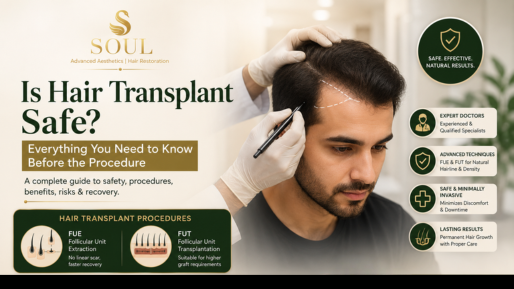
A hair transplant is a medical procedure that involves transferring healthy hair follicles from one part of the scalp, usually the donor area, to areas experiencing thinning or baldness. The transplanted follicles continue growing naturally in their new location over time.
Modern hair transplant procedures focus on creating natural-looking density while maintaining minimal discomfort and downtime. Additionally, advanced techniques now allow more precise graft placement and improved healing outcomes compared to older methods.
Is Hair Transplant Safe?
Yes, hair transplant is generally considered a safe and effective procedure when experienced and qualified professionals perform it under proper medical protocols. Modern hair transplant techniques focus on minimally invasive procedures, natural-looking results, and medically supervised recovery processes. However, the overall safety of the treatment depends on factors such as the surgeon’s expertise, clinic hygiene standards, scalp condition, and post-procedure care.
At SOUL by Dr. Freedom, hair restoration procedures focus on patient safety, personalized treatment planning, natural hairline design, and medically guided aftercare. Because every scalp condition and hair loss pattern differs, detailed consultation and scalp evaluation become essential before recommending any hair transplant procedure.
Types of Hair Transplant Procedures
Different hair transplant techniques are available depending on scalp condition, hair density, and patient goals. Therefore, selecting the right method becomes important for achieving safer and more natural-looking results.
FUE Hair Transplant
Follicular Unit Extraction, commonly known as FUE, is one of the most preferred hair transplant techniques today. In this procedure, individual hair follicles are extracted from the donor area and implanted into thinning regions carefully.
Because FUE does not involve large stitches or linear scars, many individuals prefer it for faster healing and minimal visible scarring. Additionally, the procedure allows more flexibility in designing natural hairlines and density patterns.
FUT Hair Transplant
Follicular Unit Transplantation, also known as FUT, involves removing a strip of scalp tissue from the donor area and separating it into follicular grafts for transplantation.
Although FUT may provide a larger number of grafts in certain cases, it usually leaves a linear scar on the donor area. Therefore, treatment suitability depends on the patient’s hair goals, donor density, and scalp condition.
Why Hair Transplant Is Considered Safe Today
Modern hair transplant procedures have evolved significantly with better technology, improved surgical techniques, and stricter hygiene standards. Consequently, the procedure has become much safer and more precise compared to earlier methods.
Minimally Invasive Techniques
Advanced procedures such as FUE focus on minimally invasive extraction and implantation methods. Because smaller instruments are used during surgery, tissue damage becomes significantly reduced.
As a result, patients usually experience quicker recovery, reduced discomfort, and improved healing outcomes.
Local Anesthesia Improves Safety
Hair transplants are usually performed under local anesthesia, which means patients remain awake during the procedure while the scalp area stays numb. Consequently, risks associated with general anesthesia become much lower.
Additionally, local anesthesia allows better monitoring of patient comfort and scalp response throughout the procedure.
Improved Sterilization Standards
Reputed clinics follow strict sterilization protocols to reduce infection risks and maintain safer treatment environments. Therefore, choosing a medically supervised clinic becomes extremely important for minimizing complications.
At SOUL by Dr. Freedom Hair Treatments, patient safety and hygiene standards remain important parts of every hair restoration procedure.
Natural-Looking Results
Modern implantation techniques focus on natural hair direction, density placement, and hairline design. Consequently, transplanted hair blends more naturally with existing hair growth patterns.
Because of these advancements, patients now achieve more realistic and aesthetically balanced outcomes compared to older transplant methods.
Are There Any Risks or Side Effects?
Although hair transplant is generally considered safe, minor side effects and temporary discomfort may still occur during the healing process. However, serious complications remain uncommon when experienced professionals perform the procedure correctly.
Temporary Swelling
Mild swelling around the forehead or scalp may occur for a few days after the procedure. However, swelling usually reduces naturally during the recovery phase with proper aftercare.
Redness and Sensitivity
The treated area may remain slightly red or sensitive immediately after surgery. Because the scalp undergoes micro-incisions during implantation, temporary irritation is considered normal.
Scabbing During Healing
Small scabs may form around transplanted grafts during the healing phase. However, these scabs usually fall off naturally within a few days without affecting follicle growth.
Shock Loss
Some individuals may experience temporary shedding of transplanted or surrounding hair after the procedure. This condition, known as shock loss, is usually temporary and often improves during the regrowth phase.
Infection Risk
Although uncommon, infection may occur if proper hygiene and aftercare instructions are not followed. Therefore, choosing a qualified clinic and following post-treatment guidance carefully becomes essential.
Who Is a Good Candidate for Hair Transplant?
Not every individual experiencing hair fall requires immediate transplantation. Therefore, proper diagnosis becomes important before deciding treatment suitability.
Individuals With Stable Hair Loss
People experiencing stable pattern baldness with healthy donor areas often respond better to hair transplant procedures. Additionally, realistic expectations play an important role in overall satisfaction.
Individuals With Good Donor Hair Density
The donor area must contain healthy and sufficient follicles for successful transplantation. Therefore, scalp analysis becomes important before treatment planning.
Individuals Looking for Long-Term Restoration
Hair transplant procedures are commonly preferred by individuals seeking permanent and natural-looking hair restoration solutions rather than temporary cosmetic improvements.
When Hair Transplant May Not Be Suitable
Certain scalp conditions or medical issues may affect treatment suitability and outcomes. Therefore, professional consultation remains necessary before proceeding with surgery.
Severe Scalp Conditions
Active scalp infections, severe inflammation, or certain dermatological conditions may require treatment before transplantation.
Uncontrolled Medical Conditions
Uncontrolled diabetes, severe autoimmune conditions, or bleeding disorders may affect healing and recovery after surgery.
Unrealistic Expectations
Hair transplant improves hair density and appearance, but it may not recreate the exact density experienced during younger years. Therefore, realistic expectations remain important for patient satisfaction.
Recovery After Hair Transplant
Recovery plays a major role in achieving healthy graft survival and natural-looking results. Therefore, proper aftercare becomes extremely important during the healing phase.
Initial Healing Phase
The scalp usually begins healing within the first few days after surgery. Mild redness, scabbing, and sensitivity commonly improve gradually during this phase.
Hair Shedding Phase
Temporary shedding of transplanted hair may occur within the first few weeks. However, this stage is generally considered part of the normal hair growth cycle.
New Hair Growth Phase
New hair growth usually starts becoming noticeable within a few months after the procedure. Additionally, hair density and thickness continue improving gradually over time.
Why Choosing the Right Clinic Matters
The success and safety of a hair transplant depend heavily on the expertise of the clinic and medical team performing the procedure. Therefore, selecting a trusted clinic becomes one of the most important decisions before surgery.
At SOUL by Dr. Freedom About Us, consultations focus on scalp analysis, personalized planning, natural hairline design, and medically guided restoration protocols.
Because every patient has different hair goals and scalp conditions, individualized treatment planning helps improve both safety and long-term aesthetic outcomes.
How SOUL by Dr. Freedom Focuses on Safe Hair Restoration
Hair restoration at SOUL by Dr. Freedom focuses on achieving natural-looking results while maintaining patient safety and scalp health throughout the treatment process.
Personalized Hairline Design
Every patient receives customized hairline planning according to facial structure, age, hair texture, and future hair loss patterns. Consequently, the final outcome appears more natural and balanced.
Advanced Hair Restoration Techniques
Modern techniques and medically guided procedures help improve graft survival and reduce unnecessary scalp trauma during treatment.
Ethical Treatment Planning
The clinic focuses on realistic consultations and medically appropriate recommendations rather than unnecessary procedures or exaggerated promises.
Conclusion
Hair transplant is generally considered a safe and effective hair restoration procedure when experienced professionals perform it under proper medical standards. Modern techniques such as FUE have significantly improved patient safety, recovery, and natural-looking outcomes compared to older methods.
However, successful and safe results depend heavily on proper diagnosis, personalized planning, clinic expertise, and post-procedure care. At SOUL by Dr. Freedom Contact Us, hair restoration treatments focus on patient safety, scalp health, ethical guidance, and long-term natural-looking results. Therefore, individuals considering hair transplant should always seek professional consultation before making treatment decisions.
FAQs
Q1. Is hair transplant painful?
Ans. Hair transplant procedures are usually performed under local anesthesia, which minimizes pain during the treatment. Mild discomfort may occur during recovery but usually improves within a few days.
Q2. Is hair transplant permanent?
Ans. Transplanted follicles are generally permanent because they are taken from genetically resistant donor areas.
Q3. How long does recovery take after hair transplant?
Ans. Initial healing usually takes a few days to weeks, while complete hair growth continues improving gradually over several months.
Q4. Can a hair transplant fail?
Ans. Poor aftercare, weak donor areas, or incorrect surgical techniques may affect results. Therefore, choosing an experienced clinic becomes extremely important.
Q5. Does hair transplant look natural?
Ans. Modern hair transplant techniques focus on natural hairline design and proper graft placement, which helps create realistic-looking outcomes.