What Are the Side Effects of Hair Transplant?
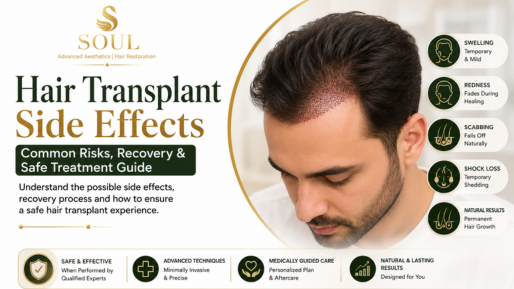
Hair transplant side effects are usually mild and temporary when experienced professionals perform the procedure under proper medical standards. Common side effects may include swelling, redness, itching, temporary shedding, scabbing, and mild discomfort during the healing phase. However, serious complications are uncommon when patients choose a qualified clinic and follow proper aftercare instructions carefully.
At SOUL by Dr. Freedom, hair restoration procedures focus on patient safety, scalp health, personalized treatment planning, and natural-looking outcomes. Because every scalp condition and hair loss pattern differs, the clinic emphasizes medically guided consultations and customized treatment approaches before performing any hair transplant procedure.
10 Common Hair Transplant Side Effects
1. Swelling After Hair Transplant
Swelling around the forehead and scalp is one of the most common temporary side effects after hair transplant surgery. This usually happens because the scalp tissues respond to the procedure and begin the natural healing process.
In most cases, swelling improves within a few days after surgery. Additionally, proper sleeping posture, hydration, and prescribed medications often help reduce discomfort during recovery.
2. Redness on the Scalp
The treated scalp area may appear slightly red immediately after the procedure because follicles are implanted through micro-incisions. This redness commonly develops during the early healing phase and gradually fades over time.
Moreover, individuals with sensitive skin may experience slightly longer redness duration depending on scalp condition and healing response.
3. Scabbing Around Transplanted Hair
Small scabs commonly form around newly implanted grafts during the recovery phase. These scabs protect healing tissues and usually fall off naturally within several days.
However, scratching or forcefully removing scabs may damage grafts and affect healing. Therefore, patients should follow proper scalp washing instructions carefully.
4. Itching During Recovery
Mild itching often develops as the scalp heals after transplantation. Dryness and scab formation may temporarily increase scalp irritation during the initial recovery period.
Although itching is common, excessive scratching should always be avoided because it may disturb healing follicles and increase infection risk.
5. Shock Loss
Shock loss refers to temporary shedding of transplanted or surrounding hair after surgery. While this condition may initially concern patients, it usually forms part of the normal recovery cycle.
In most cases, new hair growth begins gradually after the resting phase ends. Therefore, temporary shedding does not necessarily indicate transplant failure.
6. Mild Pain or Tightness
Some individuals experience mild tightness or discomfort around the donor and recipient areas after surgery. However, modern minimally invasive procedures have significantly reduced post-procedure discomfort compared to older methods.
Additionally, prescribed medications and proper aftercare usually help manage recovery comfortably.
7. Temporary Numbness
Temporary numbness or reduced scalp sensation may occur because of minor nerve irritation during the procedure. In most cases, sensation gradually improves naturally during the healing process.
However, recovery time may vary depending on individual scalp sensitivity and healing response.
8. Infection Risk
Although uncommon, infection may occur if proper hygiene standards or aftercare instructions are ignored. Therefore, choosing a medically supervised clinic becomes extremely important for safer recovery.
At SOUL by Dr. Freedom Hair Treatments, strict hygiene protocols and medically guided aftercare help reduce unnecessary complications and support healthier healing outcomes.
9. Uneven Hair Growth
Newly transplanted follicles may not grow uniformly during the early stages of recovery. Consequently, some areas may initially appear less dense while other follicles continue growing gradually.
Because hair growth cycles vary naturally, final density improvements usually continue over several months.
10. Minor Scarring
Modern FUE hair transplant procedures generally leave minimal visible scarring because follicles are extracted individually. However, FUT procedures may leave a linear scar on the donor area.
The visibility of scars often depends on surgical technique, scalp healing, and individual skin response.
How to Reduce Hair Transplant Side Effects
Proper aftercare and medically guided recovery significantly improve healing and reduce unnecessary side effects after hair transplant surgery.
Follow Aftercare Instructions Carefully
Patients should follow all post-treatment instructions regarding scalp washing, medications, hydration, and sleeping posture carefully. Proper aftercare helps protect grafts and supports healthier healing naturally.
Additionally, avoiding unnecessary touching or scratching of the scalp reduces infection and graft damage risks significantly.
Avoid Heavy Exercise Initially
Heavy physical activity and excessive sweating may affect scalp healing during the initial recovery phase. Therefore, patients are usually advised to avoid strenuous workouts temporarily after the procedure.
Protect the Scalp From Sun Exposure
Direct sunlight may irritate healing scalp tissues and increase discomfort during recovery. Consequently, protecting the scalp becomes important during the early healing period.
Maintain Healthy Nutrition
Protein-rich foods, vitamins, minerals, and proper hydration help support tissue repair and healthier follicle recovery naturally. Therefore, balanced nutrition becomes important for improving long-term results.
Choose an Experienced Hair Transplant Clinic
The expertise of the clinic and surgeon plays a major role in reducing complications and improving natural-looking outcomes. Therefore, selecting a trusted and medically supervised clinic remains extremely important. If you’re wondering Is Hair Transplant Safe?, understanding the procedure, clinic standards, and surgeon’s expertise can help you make a more informed decision before treatment.
How SOUL AESTHETIC Focuses on Safer Hair Restoration
At SOUL by Dr. Freedom About Us, hair restoration treatments focus on achieving natural-looking density while maintaining patient safety and scalp health throughout the entire process.
Personalized Scalp Analysis
Every treatment plan begins with detailed scalp analysis, donor evaluation, and consultation. Because every patient has different hair loss patterns and scalp conditions, personalized planning helps improve treatment safety and effectiveness.
Advanced Hair Restoration Techniques
Modern minimally invasive procedures help reduce scalp trauma, discomfort, and visible scarring significantly. Additionally, advanced implantation methods improve graft survival and natural-looking hairline design.
Ethical Treatment Planning
The clinic focuses on realistic patient education and medically appropriate recommendations rather than exaggerated promises. Consequently, patients receive transparent guidance regarding recovery timelines, maintenance, and expected outcomes.
Medically Guided Aftercare
Post-procedure care plays an important role in healthy recovery and graft survival. Therefore, patients receive medically supervised aftercare instructions designed to support smoother healing and long-term scalp health.
Conclusion
Hair transplant side effects are usually temporary and manageable when qualified professionals perform the procedure using proper medical standards and advanced techniques. Common side effects such as swelling, redness, itching, scabbing, and temporary shedding generally improve naturally during recovery.
However, choosing an experienced clinic and following proper aftercare instructions remain extremely important for reducing complications and achieving natural-looking results. At SOUL by Dr. Freedom Contact Us, hair restoration procedures focus on patient safety, ethical treatment planning, scalp health, and long-term natural hair growth outcomes.
FAQs
Q1. Are hair transplant side effects permanent?
Ans. Most side effects are temporary and improve naturally during the healing process.
Q2. How long does swelling last after hair transplant?
Ans. Swelling usually reduces within a few days after the procedure.
Q3. Is shock loss normal after hair transplant?
Ans. Yes, temporary shedding after surgery is common and usually improves during the regrowth phase.
Q4. Can hair transplant cause infection?
Ans. Infections are uncommon when proper hygiene standards and aftercare instructions are followed carefully.
Q5. Does hair transplant leave scars?
Ans. Modern FUE procedures usually leave minimal visible scarring, while FUT procedures may leave a linear scar.