Can You Remove Pigmentation From Face Permanently?
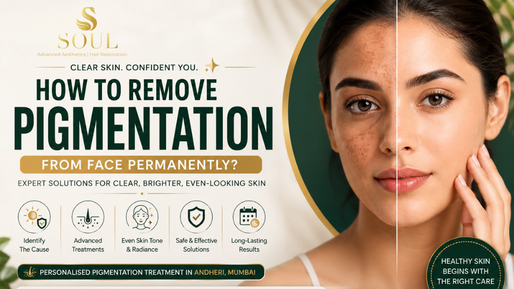
If you are wondering how to remove pigmentation from face permanently, the answer depends on the type, depth, and cause of your pigmentation. Many forms of facial pigmentation can improve significantly with the right treatment and consistent skincare. However, it is not medically realistic to promise that every type of pigmentation can be removed permanently, especially when triggers such as sun exposure, hormonal changes, acne, or skin inflammation continue.
At Soul Aesthetic in Andheri, Mumbai, the right approach starts with understanding your individual skin concern rather than applying the same treatment to every dark spot. The appearance of pigmentation, your skin type, sensitivity, history of acne, current skincare routine, and possible triggers can all influence which treatment may be suitable.
The goal is not simply to make the dark spots look lighter for a short period. A comprehensive approach focuses on improving existing pigmentation, treating or controlling the underlying trigger where possible, protecting the skin from further damage, and helping maintain the results over time.
For example, post-acne pigmentation may improve when active acne and inflammation are controlled. Sun-related dark spots may require ongoing sun protection to prevent further darkening. Melasma can improve with appropriate treatment, but it may recur because hormonal and environmental triggers can remain active.
This is why the best answer to how to remove pigmentation from face permanently is not one cream, one facial, or one procedure. The right solution begins with identifying the cause and creating a personalised treatment and maintenance plan.
What Causes Pigmentation on the Face?
Facial pigmentation develops when melanin, the natural pigment responsible for skin colour, becomes unevenly distributed or increases in specific areas. The result may appear as dark spots, brown patches, post-acne marks, or an overall uneven skin tone.
Understanding the cause is important because the treatment that may help one type of pigmentation may not be suitable for another.
Sun Exposure
Sun exposure is one of the most common factors that can trigger or worsen facial pigmentation. Ultraviolet radiation can stimulate melanin production, making existing dark spots appear darker and contributing to the development of new pigmentation.
This is also why professional treatment alone may not provide long-lasting improvement if the skin continues to receive significant sun exposure without adequate protection. A person may invest in topical treatments or professional procedures, but the pigmentation can become more noticeable again if the trigger remains active.
Daily sun protection therefore plays an important role in managing pigmentation. It should be viewed as part of the treatment plan rather than something used only during outdoor activities.
Post-Acne Pigmentation
Acne can leave dark marks after the active pimples heal. These marks are commonly known as post-inflammatory hyperpigmentation.
The risk of darker marks may increase when acne is repeatedly picked, squeezed, scratched, or irritated. Aggressive products can also increase inflammation and make the skin more reactive.
This is why managing active acne can be an important step for people who want to prevent new pigmentation from developing. If you are dealing with recurring acne along with post-acne marks, you can explore Acne Treatment at Soul Aesthetic.
Treating only the old marks while ignoring active breakouts may lead to a continuous cycle where new pigmentation develops as older pigmentation starts to fade.
Hormonal Changes
Hormonal factors can contribute to pigmentation conditions such as melasma. Melasma often appears as larger brown or greyish patches on areas such as the cheeks, forehead, nose, and upper lip.
This type of pigmentation can be persistent and may return even after visible improvement. Hormonal changes, sun exposure, and other individual triggers can influence recurrence.
Therefore, anyone searching for how to remove pigmentation from face permanently should understand that some pigmentary conditions require long-term management instead of a one-time procedure.
Skin Inflammation and Irritation
Inflammation can trigger pigmentation in some people. Skin irritation caused by harsh skincare products, aggressive exfoliation, burns, allergic reactions, or inflammatory skin conditions can leave darker areas after the skin heals.
Using more products is not always the solution. In some cases, repeatedly adding acids, scrubs, or strong active ingredients can damage the skin barrier and create more irritation.
A suitable treatment plan should improve pigmentation without unnecessarily stressing the skin.
Ageing and Cumulative Skin Damage
Over time, repeated exposure to sunlight and environmental factors can contribute to dark spots and uneven skin tone. Pigmentation may also appear alongside fine lines, changes in texture, and other visible signs of skin ageing.
In these situations, treatment may need to consider the overall condition of the skin rather than focusing only on one dark spot.
For people who are concerned about pigmentation along with visible signs of ageing, Anti-Ageing Treatment can provide additional information about available treatment approaches.
How to Identify the Type of Pigmentation
Before deciding how to remove pigmentation from face permanently, it is important to identify what type of pigmentation you have.
Different pigmentation concerns can look similar in photographs or in the mirror, but they may develop for completely different reasons.
A professional assessment may consider several factors.
The Colour of the Pigmentation
The colour can provide useful information. Pigmentation may appear light brown, dark brown, greyish, or darker than the surrounding skin.
The appearance alone does not always provide a complete diagnosis, but it can help guide further assessment and treatment planning.
The Pattern and Location
Isolated dark spots may have a different cause from symmetrical patches across the cheeks or forehead.
Pigmentation that develops after acne may appear in areas where previous breakouts occurred, while melasma often appears in a more symmetrical pattern.
The location and distribution can therefore help identify possible triggers.
How Long the Pigmentation Has Been Present
Recently developed pigmentation may require a different approach from marks that have been present for several years.
Long-standing pigmentation can sometimes be more persistent, and the treatment timeline may differ depending on the underlying cause and depth of the pigment.
Your Skin History
Your history of acne, skin sensitivity, previous treatments, product use, sun exposure, and hormonal changes can provide important context.
For example, if dark marks consistently appear after acne, post-inflammatory pigmentation may be contributing. If pigmentation worsens after sun exposure, sun-related triggers may play a significant role.
Skin Sensitivity and Current Skincare
A person with sensitive or easily irritated skin may require a different approach from someone whose skin tolerates stronger active ingredients.
A professional treatment plan should consider the skin barrier and avoid unnecessarily aggressive methods that may increase inflammation and worsen pigmentation.
New, rapidly changing, irregular, or otherwise concerning spots should be assessed by an appropriately qualified medical professional rather than automatically being treated as ordinary cosmetic pigmentation.
Treatments to Remove Pigmentation From Face Permanently
When people search for how to remove pigmentation from face permanently, they often expect one treatment that works for every type of dark spot.
In reality, the most effective approach usually depends on the cause, skin type, depth of pigmentation, sensitivity, and treatment history.
The following approaches may form part of a personalised treatment plan.
1. Professional Skin Assessment and Personalised Planning
The first and most important step is identifying what you are treating.
A personalised assessment can help determine whether the pigmentation is related to acne, sun exposure, melasma, inflammation, uneven skin tone, or another concern. This prevents unnecessary trial and error with products or procedures that may not suit your skin.
At Soul Aesthetic, treatment planning can focus on your individual pigmentation pattern and skin needs instead of applying the same approach to every patient.
2. Suitable Topical Treatments
Topical treatments may be used to help improve the appearance of hyperpigmentation and uneven skin tone.
The ingredients and treatment strength should depend on your individual skin concern. Some products focus on reducing excess pigment production, while others support skin renewal or help improve overall skin tone.
However, stronger is not always better. Combining multiple active ingredients without understanding how they interact can cause dryness, irritation, and inflammation.
A suitable routine should aim for consistent improvement without unnecessarily compromising the skin barrier.
3. Professional Chemical Peels
A chemical peel may be considered for selected pigmentation concerns.
Professional peels use controlled exfoliation to support skin renewal. However, the type and intensity of the peel should be selected based on your skin type, pigmentation pattern, sensitivity, and treatment goals.
An aggressive peel may not necessarily provide better results. In people who are prone to post-inflammatory pigmentation, excessive irritation can sometimes create additional dark marks.
This is why professional evaluation and appropriate treatment selection matter.
4. Advanced Skin Treatments
Depending on the pigmentation concern, a professional may recommend advanced in-clinic treatments as part of a broader plan.
The right treatment may depend on:
- The depth and pattern of pigmentation
- Your natural skin tone and skin type
- Skin sensitivity
- The cause of the pigmentation
- Previous skincare and professional treatments
- The risk of post-treatment pigmentation
- Your expectations and treatment goals
A responsible consultation should explain what the treatment aims to achieve, how many sessions may be required, possible side effects, aftercare, and whether maintenance may be necessary.
5. Treatment for Post-Acne Marks and Pigmentation
Post-acne pigmentation may require a different strategy from active acne.
The first goal is often to control the ongoing breakouts and reduce inflammation. Once active acne is managed, treatment can focus more effectively on the marks that remain.
Pigmentation and acne scars are also different concerns. Pigmentation mainly affects skin colour, while scars can affect skin texture and structure.
If you have both pigmentation and visible acne-related marks, Scar & Pigmentation Treatment may help you explore suitable treatment options.
6. Treatment for Uneven Skin Tone
Not everyone experiences pigmentation as individual dark spots. Some people notice that certain areas of the face appear darker than others, creating an uneven overall complexion.
This can develop because of sun exposure, inflammation, previous acne, irritation, or a combination of factors.
A personalised treatment plan can focus on improving the overall appearance of the skin instead of treating only one visible spot. Learn more about Uneven Skin Tone Treatment at Soul Aesthetic.
Why Random Home Remedies May Not Remove Pigmentation
People searching for how to remove pigmentation from face permanently often try home remedies before seeking professional advice.
Common DIY methods may include lemon juice, harsh scrubs, repeated exfoliation, or mixing multiple active skincare products.
The problem is that irritation can sometimes worsen pigmentation.
Lemon and Other Harsh DIY Ingredients
Natural does not always mean suitable for facial skin.
Certain DIY ingredients can irritate the skin, particularly when used repeatedly or in concentrated forms. Irritation may trigger inflammation, and inflammation can contribute to additional pigmentation in some people.
Over-Exfoliation
Many people assume that dark spots will disappear faster if they exfoliate more often.
However, excessive exfoliation can damage the skin barrier, increase dryness and sensitivity, and create inflammation. This can make pigmentation more difficult to manage.
Using Too Many Active Ingredients
Combining several strong products without professional guidance can create unnecessary irritation.
For example, using multiple acids, retinoid-based products, scrubs, and other active ingredients simultaneously may overwhelm the skin.
A simpler routine that you can follow consistently is often more useful than constantly changing products.
Ignoring the Underlying Cause
A home remedy may temporarily improve the appearance of the skin without addressing the trigger.
If acne, sun exposure, hormonal changes, or inflammation continue, new pigmentation may continue to develop.
That is why understanding the cause remains one of the most important parts of finding a long-term solution.
Benefits of Pigmentation Treatment at Soul Aesthetic
Choosing professional treatment for pigmentation can provide advantages beyond simply selecting a product or procedure. At Soul Aesthetic in Andheri, Mumbai, a personalised approach can help match the treatment strategy to the individual’s skin concerns and goals.
1. Personalised Assessment of Your Skin
Every person experiences pigmentation differently. One person may have dark marks after acne, while another may have sun-related spots, melasma, or overall uneven skin tone.
A personalised assessment helps identify the possible cause, appearance, location, and history of the pigmentation. It also considers factors such as skin sensitivity and previous treatments.
This can reduce unnecessary trial and error and help create a more focused treatment plan.
2. Treatment Based on Your Specific Concern
A treatment that suits post-acne pigmentation may not be the right choice for melasma or sun-related pigmentation.
Professional treatment planning can consider the type of pigmentation before recommending an approach. This makes it possible to focus on the actual concern rather than choosing a treatment only because it is popular or heavily promoted online.
The treatment plan can also be adjusted based on how your skin responds over time.
3. A Focus on Skin Safety
Trying to remove pigmentation aggressively can sometimes cause additional irritation.
A professional approach aims to balance visible improvement with skin safety. The intensity of a procedure or active treatment should be appropriate for your skin type, sensitivity, and pigmentation concern.
This is particularly important for people who are prone to post-inflammatory pigmentation, where irritation itself can contribute to new dark marks.
4. Management of Related Skin Concerns
Pigmentation does not always exist as an isolated concern.
You may also experience acne, acne marks, uneven skin tone, visible signs of ageing, or changes in skin texture. A personalised consultation can identify whether these concerns are connected and whether they should be addressed as part of the overall treatment plan.
For a broader understanding of available options, you can explore Skin Treatments at Soul Aesthetic.
5. Realistic Expectations Before Treatment
One of the most important benefits of professional guidance is understanding what treatment can realistically achieve.
Pigmentation can improve significantly, but the speed and degree of improvement can vary. Some forms of pigmentation may also recur if triggers such as sun exposure, hormones, acne, or inflammation continue.
A realistic discussion before treatment can help you understand the expected timeline, possible limitations, aftercare, and the importance of maintenance.
6. Long-Term Skin Management
The goal should not be limited to improving the appearance of the skin for a few weeks.
A long-term strategy can include suitable treatment, consistent skincare, sun protection, management of active acne or inflammation, and follow-up care when required.
This approach is especially important for people looking for lasting improvement rather than a temporary cosmetic result.
How Long Does Pigmentation Treatment Take?
Pigmentation treatment requires patience because the skin does not change overnight.
The time required for visible improvement can depend on several important factors.
The Type of Pigmentation
Superficial pigmentation may respond differently from deeper or more persistent pigmentation.
Post-acne marks, melasma, sun-related pigmentation, and uneven skin tone can each follow different timelines.
This is why it is difficult to promise that every person will achieve the same result within a fixed number of days or sessions.
The Depth of the Pigmentation
Pigment that is closer to the surface of the skin may respond differently from pigmentation that appears deeper.
The treatment approach and timeline should therefore be based on professional assessment rather than copying another person’s skincare routine or treatment schedule.
Your Skin Type and Sensitivity
Skin type can influence how aggressively pigmentation can be treated.
Some people can tolerate certain active ingredients or procedures well, while others may need a more gradual approach to reduce the risk of irritation.
A slower, carefully planned treatment can sometimes be more appropriate than trying to achieve the fastest possible change.
Consistency With Treatment and Aftercare
Skipping skincare, frequently changing products, or failing to follow aftercare instructions can affect progress.
Consistency allows the skin to adapt to an appropriate routine and gives the treatment enough time to show results.
Continued Exposure to Triggers
Sun exposure, recurring acne, inflammation, and hormonal influences can affect how quickly pigmentation improves and whether it returns.
Controlling these triggers can be just as important as the treatment itself.
How to Prevent Pigmentation From Returning
Improving existing pigmentation is only one part of the process. If the underlying triggers remain active, pigmentation can return or new dark marks can develop.
Protect Your Skin From Sun Exposure
Consistent sun protection can help prevent existing pigmentation from becoming darker and reduce the risk of developing additional sun-related pigmentation.
Use sun protection as recommended for your skin and daily level of exposure. Protective clothing, shade, and other sun-avoidance measures can also support your skincare routine.
Avoid Picking or Squeezing Acne
Picking acne can increase inflammation and raise the likelihood of dark marks after the breakout heals.
If acne continues to develop regularly, managing the active condition can help reduce the formation of new pigmentation.
Avoid Over-Exfoliating Your Skin
More exfoliation does not necessarily mean faster results.
Repeated use of harsh scrubs or multiple strong active ingredients can irritate the skin and potentially worsen pigmentation. Give your skin enough time to respond and avoid constantly adding new products.
Maintain a Consistent Skincare Routine
Changing your entire skincare routine every few days makes it difficult to understand how your skin is responding.
A consistent routine allows you to monitor progress and identify whether a particular product is causing irritation.
Manage the Underlying Cause
If pigmentation is linked to acne, inflammation, hormonal influences, or another ongoing trigger, addressing that factor can be important for maintaining improvement.
Long-term management is often the closest practical approach to achieving lasting results.
How to Choose a Clinic for Pigmentation Treatment in Andheri, Mumbai
If you are searching for how to remove pigmentation from face permanently in Andheri, Mumbai, choosing a clinic should involve more than comparing package prices or looking only at before-and-after photographs.
Consider the following factors.
Does the Clinic Identify the Cause of Your Pigmentation?
A professional consultation should begin with understanding your skin concern.
The clinic should consider whether the pigmentation is related to acne, sun exposure, hormonal factors, inflammation, or another possible trigger.
Without identifying the likely cause, treatment can become a process of trial and error.
Is the Treatment Suitable for Your Skin Type?
Not every procedure or skincare ingredient is suitable for every skin type.
This is particularly important when there is a risk of irritation or post-inflammatory pigmentation. Ask why a particular treatment is being recommended for your specific skin concern.
Are Realistic Results Explained?
Be cautious about clinics that promise instant whitening, guaranteed results, or permanent removal without discussing the cause of the pigmentation.
A responsible approach should explain that results vary and that some conditions can recur.
Is Prevention Included in the Treatment Plan?
A good pigmentation strategy should not end after an in-clinic procedure.
Ask about sun protection, skincare, aftercare, maintenance, and ways to reduce the risk of pigmentation returning.
Are Related Skin Concerns Considered?
Acne, scarring, uneven skin tone, and ageing concerns can influence the overall appearance of the skin.
A personalised consultation can determine whether these concerns should also be addressed as part of a broader treatment strategy.
Is Clear Aftercare Provided?
Aftercare can influence both recovery and results.
Before beginning treatment, make sure you understand which products to use or avoid, whether there are activity restrictions, how to protect the skin, and when to contact the clinic if you experience an unexpected reaction.
Why People Consider Soul Aesthetic for Facial Pigmentation Concerns
When looking for pigmentation treatment in Andheri, Mumbai, people may consider Soul Aesthetic for a personalised approach that focuses on individual skin concerns rather than a one-size-fits-all solution.
Individual Skin Assessment
Every person’s pigmentation can have a different cause and appearance.
An individual assessment can consider the history of the pigmentation, the areas affected, possible triggers, skin sensitivity, current skincare routine, and any related concerns such as acne or uneven skin tone.
This information helps create a more targeted treatment approach.
Personalised Treatment Planning
A personalised plan can take into account your skin type, pigmentation pattern, treatment history, and goals.
Instead of assuming that every dark spot needs the same procedure, the approach can focus on selecting an appropriate option for your specific concern and adjusting the plan when necessary.
Focus on Realistic Outcomes
A responsible approach to pigmentation treatment should avoid unrealistic promises.
Some pigmentation may improve significantly, while other types can be persistent or may return. Explaining these limitations before treatment helps patients make more informed decisions.
Attention to Overall Skin Health
The goal is not simply to lighten the skin as quickly as possible.
Maintaining skin health and reducing unnecessary irritation can be important, especially for people who are prone to pigmentation after inflammation.
A treatment plan should aim to improve the appearance of pigmentation while supporting the overall condition of the skin.
Support for Related Skin Concerns
Pigmentation may appear alongside other concerns, including acne, scars, uneven skin tone, and visible signs of ageing.
Considering these concerns together can help create a more comprehensive skin-care strategy rather than treating every issue separately without understanding how they may be connected.
Long-Term Approach and Maintenance
Some pigmentation concerns require ongoing attention.
A long-term approach can include professional treatment where appropriate, suitable skincare, consistent sun protection, and managing triggers that may cause pigmentation to return.
You can learn more about the clinic and its approach through About Soul Aesthetic.
Conclusion
So, how to remove pigmentation from face permanently?
The most honest answer is that many types of facial pigmentation can improve significantly, but permanent removal cannot be guaranteed for every condition. Pigmentation caused by ongoing sun exposure, hormonal changes, acne, or repeated inflammation may return if the trigger continues.
The best approach starts with identifying the type and cause of your pigmentation. From there, an appropriate treatment plan can focus on improving existing dark spots while also reducing the factors that may cause new pigmentation to develop.
At Soul Aesthetic in Andheri, Mumbai, a personalised approach can consider your skin type, pigmentation pattern, sensitivity, previous treatments, and overall skin concerns. Whether you are dealing with post-acne marks, uneven skin tone, sun-related pigmentation, or persistent dark patches, the right treatment should be based on your individual needs.
The long-term goal is not simply to chase instant results. It is to improve pigmentation safely, maintain healthy skin, reduce unnecessary irritation, protect the skin from further triggers, and create a routine that supports lasting improvement.
If you want professional guidance for facial pigmentation concerns, Contact Soul Aesthetic to discuss suitable treatment options.
FAQs
Q1. Can pigmentation be removed permanently from the face?
Ans. Some pigmentation can fade significantly, but permanent removal cannot be guaranteed. Conditions affected by sun exposure, hormones, or inflammation may recur.
Q2. What is the best treatment for facial pigmentation?
Ans. The best treatment depends on the type, cause, depth of pigmentation, skin type, and sensitivity. A professional assessment can help identify the most suitable approach.
Q3. How long does pigmentation take to fade?
Ans. The timeline varies. Some marks may gradually improve over weeks or months, while deeper or persistent pigmentation can require longer treatment and maintenance.
Q4. Can acne cause pigmentation on the face?
Ans. Yes. Acne-related inflammation can leave dark marks after pimples heal, especially when acne is picked or repeatedly irritated.
Q5. Can pigmentation return after treatment?
Ans. Yes. Pigmentation may return if triggers such as sun exposure, hormonal changes, acne, or skin inflammation continue.
Q6. Is sunscreen important after pigmentation treatment?
Ans. Yes. Consistent sun protection can help prevent existing pigmentation from becoming darker and support the maintenance of treatment results.