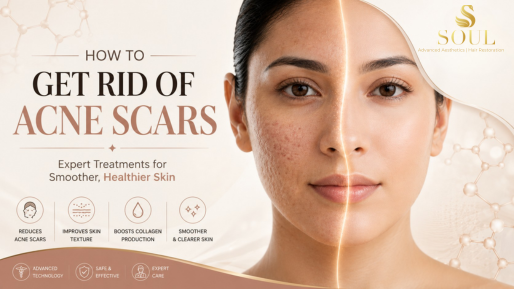
Acne may disappear, but the scars it leaves behind can affect your confidence long after the breakouts have healed. Whether you’re dealing with deep acne scars, uneven skin texture, or dark marks left by pimples, finding the right solution is essential for restoring healthy-looking skin. If you’re wondering how to get rid of acne scars, the answer depends on the type of scars you have, their severity, and your skin type.
At Soul Aesthetic, we understand that every patient’s skin is unique. Our experienced specialists provide personalized acne scar treatments using advanced, medically approved techniques designed to improve skin texture, reduce the appearance of scars, and promote smoother, healthier skin. Instead of offering a one-size-fits-all solution, we carefully evaluate your skin and recommend a customized treatment plan that delivers natural-looking, long-lasting results.
In this comprehensive guide, you’ll learn how to get rid of acne scars, understand the different types of acne scars, discover the most effective treatment options, and find out why professional care can make a significant difference in your skin restoration journey.
What Are Acne Scars?
Acne scars are permanent changes in the skin that develop when inflamed acne lesions damage the deeper layers of the skin. As the skin heals, it produces collagen to repair the damaged tissue. If the body produces too little or too much collagen during this process, different types of scars can form.
Many people confuse acne scars with acne marks, but they are not the same.
- Acne marks are temporary discolorations that usually fade over time.
- Acne scars involve changes in the skin’s texture and often require professional treatment to improve.
The sooner acne is treated, the lower the risk of developing permanent scars.
Professional evaluation is important because different scar types require different treatment approaches. At Soul Aesthetic, our specialists carefully assess your skin and recommend personalized Skin Treatments that target acne scars, improve skin texture, and restore a smoother, healthier complexion.
Why Do Acne Scars Form?
Acne scars develop when inflammation damages the deeper layers of the skin. During healing, the body produces collagen to repair the affected area. If collagen production is unbalanced, scars begin to form.
Several factors influence whether acne leaves permanent scars, including the severity of inflammation, genetics, delayed treatment, and improper handling of pimples.
Understanding why scars develop is the first step in choosing the right treatment plan.
Types of Acne Scars
Identifying the type of scar is essential because each type responds differently to treatment. At Soul Aesthetic, our specialists examine your skin carefully before recommending the most suitable treatment.
Ice Pick Scars
Ice pick scars are small, deep, narrow scars that extend into the skin, giving the appearance of tiny puncture marks.
These scars usually develop after severe inflammatory acne and are among the most challenging scar types to treat.
Professional procedures such as laser resurfacing or specialized scar revision techniques are often recommended for noticeable improvement.
Boxcar Scars
Boxcar scars appear as round or oval depressions with clearly defined edges.
They commonly develop on the cheeks and temples and result from collagen loss during healing.
Depending on their depth, treatments such as microneedling, laser therapy, or chemical peels may be recommended to improve skin texture.
Rolling Scars
Rolling scars create a wave-like appearance across the skin because fibrous bands pull the skin downward.
These scars make the skin look uneven, especially under natural light.
Procedures such as subcision combined with collagen-stimulating treatments often provide significant improvement.
Atrophic Scars
Atrophic scars are the most common type of acne scars.
They appear as depressed areas because insufficient collagen is produced during healing.
Ice pick, boxcar, and rolling scars all fall under the category of atrophic scars.
Treatment focuses on stimulating collagen production to gradually improve skin texture.
Hypertrophic Scars
Unlike depressed scars, hypertrophic scars develop when the body produces excess collagen.
These scars appear raised above the skin’s surface and are more commonly found on the chest, shoulders, jawline, and back.
Specialized treatments help flatten the scar while improving its appearance.
What Causes Acne Scars?
If you’re wondering how to get rid of acne scars, it’s important to first understand why they develop. Although acne scars form during the skin’s natural healing process, several factors can increase the likelihood of permanent scarring.
Severe Inflammatory Acne
Cystic acne and nodular acne penetrate deeper into the skin, causing greater tissue damage.
The more severe the inflammation, the higher the risk of permanent scarring.
Seeking early treatment significantly reduces this risk.
Picking or Squeezing Pimples
One of the most common causes of acne scars is picking or popping pimples.
Doing so pushes bacteria and inflammation deeper into the skin, increasing tissue damage and delaying healing.
Avoid touching active acne to minimize the chance of permanent scars.
Delayed Acne Treatment
Ignoring acne or relying solely on home remedies may allow inflammation to continue for longer periods.
Early treatment by experienced specialists helps control breakouts before permanent scars develop.
Genetics
Some individuals naturally produce either too much or too little collagen during wound healing.
As a result, they may be more prone to developing acne scars even after relatively mild breakouts.
Repeated Breakouts
Frequent acne flare-ups repeatedly damage the same areas of skin, increasing the likelihood of long-term scarring.
Managing acne early is one of the most effective ways to prevent future scars.
Skin Infections
Improper handling of acne lesions can introduce bacteria into the skin, worsening inflammation and increasing tissue damage.
Keeping the skin clean and following a proper skincare routine supports healthier healing.
Lack of Sun Protection
Excessive sun exposure does not directly cause acne scars, but it can darken existing scars and make them more noticeable.
Daily use of a broad-spectrum sunscreen helps protect healing skin and improves the appearance of post-acne marks over time.
Best Treatments to Get Rid of Acne Scars
If you’re searching for how to get rid of acne scars, it’s important to understand that no single treatment works for every type of scar. The most effective solution depends on the type of acne scars, their depth, your skin type, and your overall skin health. At Soul Aesthetic, our specialists perform a detailed skin assessment before recommending a personalized treatment plan that delivers safe, natural-looking, and long-lasting results.
Modern dermatological treatments focus on stimulating collagen production, resurfacing damaged skin, and improving overall skin texture rather than simply masking scars.
Laser Resurfacing Treatment
Laser resurfacing is one of the most advanced and effective procedures for improving acne scars. The laser works by creating controlled micro-injuries in the skin, stimulating collagen production and encouraging new, healthy skin cells to replace damaged tissue.
Laser treatment can help improve:
- Deep acne scars
- Uneven skin texture
- Post-acne pigmentation
- Enlarged pores
- Fine lines associated with scarred skin
Most patients notice gradual improvement over several sessions as collagen continues to rebuild beneath the skin.
Microneedling
Microneedling, also known as collagen induction therapy, is a minimally invasive treatment that uses tiny sterile needles to create controlled microchannels in the skin.
This natural healing response stimulates collagen and elastin production, making it particularly effective for:
- Rolling scars
- Boxcar scars
- Mild atrophic scars
- Uneven skin texture
Because collagen remodeling continues for several months, improvements become more noticeable over time.
Chemical Peels
Chemical peels gently exfoliate the outer layer of damaged skin, encouraging fresh skin cell regeneration.
Depending on the severity of your acne scars, your specialist may recommend different strengths of peels to improve:
- Acne marks
- Mild acne scars
- Uneven skin tone
- Skin texture
- Dull complexion
Patients often notice smoother, brighter skin after completing a series of treatments.
Subcision
Subcision is commonly recommended for rolling acne scars.
During this procedure, a fine needle is inserted beneath the skin to release the fibrous bands that pull the scar downward. Once these bands are released, the skin gradually becomes smoother as new collagen forms.
Subcision is often combined with microneedling or laser treatments for enhanced results.
Platelet-Rich Plasma (PRP) Therapy
PRP therapy uses the patient’s own platelet-rich plasma, which contains natural growth factors that support tissue repair and collagen production.
When combined with microneedling or laser treatment, PRP may help:
- Accelerate healing
- Improve collagen formation
- Enhance skin texture
- Support overall skin rejuvenation
Dermal Fillers
Some deep acne scars respond well to dermal fillers.
Fillers temporarily lift depressed scars, making the skin surface appear smoother and more even.
Your specialist will determine whether fillers are suitable based on your scar type and desired outcome.
Combination Treatments
Many patients achieve the best results through a combination of treatments rather than a single procedure.
For example, your treatment plan may include:
- Laser resurfacing
- Microneedling
- PRP therapy
- Chemical peels
- Medical-grade skincare
By combining therapies, our specialists can address multiple skin concerns simultaneously while achieving more comprehensive improvements.
Many patients with acne scars also experience pigmentation and uneven skin tone after the scars begin to heal. In such cases, combining acne scar treatments with Skin Fairness Treatment may help improve overall skin clarity, reduce discoloration, and promote a brighter, more even complexion.
Acne Scar Before and After Results
One of the most encouraging aspects of professional acne scar treatment is seeing gradual improvements in skin texture and overall appearance.
Most patients notice benefits such as:
- Smoother skin texture
- Reduced scar depth
- Improved skin tone
- Better collagen production
- Smaller-looking pores
- Increased confidence
Results vary depending on:
- Type of acne scars
- Severity of scarring
- Treatment method
- Number of sessions
- Skin healing response
- Aftercare compliance
At Soul Aesthetic, we focus on achieving natural-looking improvements rather than unrealistic perfection. While some patients notice visible changes after the first few sessions, optimal results usually develop gradually over several months as collagen remodeling continues.
Can Acne Scars Be Removed Naturally?
Many people search for natural ways to reduce acne scars before considering professional treatment. While certain home care practices can improve overall skin health and help fade post-acne marks, deep acne scars usually require medical treatment to achieve significant improvement.
Use Sunscreen Every Day
Sun exposure can darken acne scars and make them more noticeable.
Applying a broad-spectrum sunscreen with SPF 30 or higher every day helps protect healing skin and prevents pigmentation from becoming worse.
Vitamin C Serums
Vitamin C is a powerful antioxidant that helps brighten the skin and reduce post-inflammatory pigmentation.
Although it cannot remove deep acne scars, it may improve skin tone and support healthy collagen production when used consistently.
Retinoids
Retinoids encourage skin cell turnover and stimulate collagen production.
Prescription-strength retinoids can gradually improve mild acne scars and uneven skin texture under professional supervision.
Aloe Vera
Aloe vera contains soothing compounds that help calm irritated skin and support healing.
While it may improve hydration and reduce redness, it is unlikely to significantly improve deep acne scars.
Healthy Lifestyle Habits
Healthy skin begins from within.
Simple habits that support skin healing include:
- Drinking plenty of water
- Eating antioxidant-rich foods
- Getting enough sleep
- Managing stress
- Avoiding smoking
These habits complement professional treatments and help maintain healthier skin over the long term.
Tips to Prevent Acne Scars
Preventing acne scars is often easier than treating them.
Taking the right steps early can significantly reduce your risk of permanent skin damage.
Avoid Picking or Squeezing Pimples
Picking acne increases inflammation, pushes bacteria deeper into the skin, and damages healthy tissue.
Allow pimples to heal naturally or seek professional treatment.
Treat Acne Early
The sooner acne is controlled, the lower the chance of developing permanent scars.
Professional treatment helps reduce inflammation before it causes long-term damage.
Follow a Consistent Skincare Routine
Using gentle cleansers, moisturizers, and dermatologist-recommended products supports healthy skin healing and reduces irritation.
Protect Your Skin from the Sun
Daily sunscreen use protects healing skin and reduces the risk of pigmentation after acne.
Maintain a Healthy Lifestyle
Balanced nutrition, adequate hydration, regular exercise, and quality sleep all contribute to healthier skin and improved healing.
Visit a Skin Specialist
If your acne is persistent or beginning to leave scars, early consultation with an experienced specialist can prevent long-term skin damage and improve treatment outcomes.
Why Choose Soul Aesthetic for Acne Scar Treatment?
Choosing the right clinic is one of the most important decisions in your journey toward clearer, healthier skin. If you’re wondering how to get rid of acne scars, professional evaluation and personalized treatment can make a significant difference. At Soul Aesthetic, we combine advanced dermatological technology, personalized treatment plans, and patient-focused care to help reduce the appearance of acne scars while improving your skin’s overall health. Our goal is not just to treat the scars you see today but to restore smoother skin and boost your confidence with long-lasting, natural-looking results.
Every patient receives an individualized treatment plan because no two acne scars are the same. By understanding your skin type, scar pattern, and skincare goals, our specialists recommend treatments that deliver safe and effective outcomes.
Personalized Skin Assessment
Every successful acne scar treatment begins with a thorough skin evaluation.
During your consultation, our specialists assess:
- Type of acne scars
- Skin type
- Severity of scarring
- Active acne (if present)
- Previous treatments
- Medical history
- Lifestyle factors
This detailed assessment allows us to recommend the most suitable treatment plan for your skin.
Advanced Acne Scar Treatments
At Soul Aesthetic, we use modern technologies and medically approved procedures to improve acne scars and overall skin quality.
Depending on your skin’s needs, your personalized treatment plan may include:
- Laser resurfacing
- Microneedling
- PRP Therapy
- Chemical peels
- Combination therapies
- Medical-grade skincare
Our treatments focus on stimulating collagen production, improving skin texture, and delivering gradual, natural-looking improvements.
Experienced Skin Specialists
Our experienced aesthetic professionals understand that every patient’s skin heals differently.
Rather than following a one-size-fits-all approach, we continuously monitor your progress and modify your treatment plan whenever necessary to help you achieve the best possible results safely.
Customized Treatment Plans
No single treatment is ideal for every acne scar.
Some patients respond well to laser resurfacing, while others benefit more from microneedling or combination treatments. Our personalized approach ensures that every procedure is selected according to your unique skin concerns and long-term goals.
Focus on Natural-Looking Results
We believe successful acne scar treatment should improve your skin without making it look overtreated.
Our specialists focus on:
- Smoother skin texture
- Better collagen production
- Reduced scar visibility
- Healthier skin quality
- Natural-looking improvements
Every treatment is performed with patient safety and long-term skin health as our highest priorities.
Comprehensive Aftercare Support
Your skincare journey continues long after your treatment session.
We provide:
- Personalized aftercare instructions
- Medical-grade skincare recommendations
- Regular follow-up appointments
- Progress monitoring
- Long-term maintenance guidance
This ongoing support helps maximize your results while maintaining healthier skin for years to come.
To learn more about our philosophy, experienced team, and patient-centered approach, visit our About Us page.
Conclusion
If you’re wondering how to get rid of acne scars, the first step is understanding that every scar is different and requires a personalized treatment approach. While home remedies and skincare products may improve overall skin health, professional treatments are often the most effective solution for reducing the appearance of deep acne scars and improving skin texture.
At Soul Aesthetic, we combine advanced technology, evidence-based treatments, and personalized care to help patients achieve smoother, healthier, and more confident-looking skin. From your initial consultation to post-treatment follow-up, our experienced specialists are committed to providing safe, effective, and natural-looking results tailored to your unique skin concerns.
Whether you’re dealing with ice pick scars, rolling scars, boxcar scars, or post-acne pigmentation, our team will create a customized treatment plan designed to restore your skin’s health and appearance.
If you’re ready to begin your journey toward clearer skin, Contact Us today to schedule your personalized consultation and discover the most suitable acne scar treatment for your needs.
Q1. Can acne scars be removed permanently?
Ans. Many acne scars can be significantly improved with professional treatments. The results depend on the type, depth, and severity of the scars, as well as your skin’s healing response.
Q2. Which treatment is best for acne scars?
Ans. The best treatment depends on your scar type and skin condition. Your specialist may recommend laser resurfacing, microneedling, PRP therapy, chemical peels, or a combination of treatments.
Q3. Is acne scar treatment painful?
Ans. Most treatments involve minimal discomfort. Your specialist may use numbing cream when required to make the procedure more comfortable.
Q4. How many sessions will I need?
Ans. The number of sessions varies depending on the severity of your acne scars and the treatment selected. Most patients achieve the best results through multiple sessions.
Q5. How long does recovery take?
Ans. Recovery depends on the procedure performed. Some treatments involve little to no downtime, while others may require a few days for the skin to heal.
Q6. Can old acne scars be treated?
Ans. Yes. Even older acne scars can often be improved with advanced dermatological procedures that stimulate collagen production and resurface the skin.
Q7. Can acne scars come back after treatment?
Ans. Once a scar has improved, it usually does not return. However, new acne breakouts can create new scars if left untreated. Proper skincare and early acne management are essential for maintaining results.
Q8. Is acne scar treatment suitable for all skin types?
Ans. Most modern acne scar treatments can be customized for different skin types. A detailed consultation helps determine the safest and most effective option for your skin.