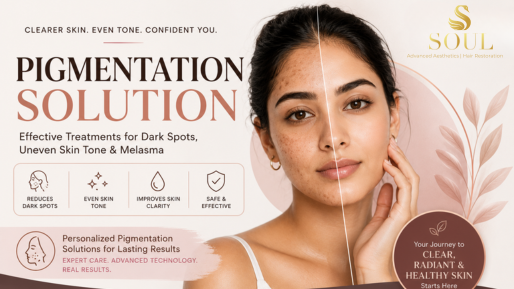
Pigmentation is one of the most common skin concerns. Dark spots, uneven skin tone, melasma, and post-acne marks can make your skin look dull or uneven. Although pigmentation is usually harmless, it can affect your confidence and make you search for a reliable pigmentation solution.
So, what can actually help reduce pigmentation?
The right treatment depends on the type, cause, severity, and depth of the pigmentation. At Soul Aesthetic, we believe every skin concern needs a personalized approach. Our specialists assess your skin, understand the possible cause of pigmentation, and recommend a treatment plan according to your individual needs.
Professional treatments may help reduce the appearance of pigmentation while improving overall skin tone and texture. However, results take time, and some conditions, such as melasma, may return if triggers continue.
In this guide, we explain what causes pigmentation, the available treatment options, how long results may take, and what you can do to maintain clearer-looking skin.
What Causes Skin Pigmentation?
Pigmentation occurs when your skin produces or distributes more melanin than usual. Melanin is the natural pigment responsible for your skin color.
When your skin produces excess pigment in certain areas, you may notice dark patches, spots, or an uneven skin tone.
Several factors can contribute to pigmentation.
Sun Exposure
Sun exposure is one of the biggest contributors to pigmentation.
UV radiation can stimulate pigment-producing cells and make existing dark spots more visible. Regular sun exposure can also worsen certain conditions, including melasma.
This is why daily sun protection is an important part of pigmentation management.
Using sunscreen, limiting prolonged direct sunlight, and wearing protective clothing can help protect your skin.
Hormonal Changes
Hormonal changes can trigger or worsen certain types of pigmentation, particularly melasma.
Pregnancy, hormonal medications, and other hormonal fluctuations can influence melanin production.
Melasma commonly appears as brown or greyish-brown patches on the cheeks, forehead, nose, and upper lip.
Acne and Inflammation
Acne doesn’t always disappear without leaving a trace.
After an acne breakout heals, you may notice brown or dark marks in the same area. This is known as post-inflammatory hyperpigmentation.
Picking or squeezing pimples can increase inflammation and make these marks more noticeable.
Skin Irritation
Using too many strong skincare products can irritate your skin.
Excessive exfoliation, harsh ingredients, or unsuitable products can damage the skin barrier and trigger inflammation. For pigmentation-prone skin, repeated irritation may make discoloration more noticeable.
A simple and gentle skincare routine can often be a better choice than constantly trying aggressive products.
Genetics
Your genes can also influence your tendency to develop pigmentation.
Some people naturally develop pigmentation more easily after sun exposure, acne, inflammation, or hormonal changes.
Understanding your personal triggers can help your specialist create a more suitable treatment plan.
What Are the Different Types of Pigmentation?
Before choosing a pigmentation solution, it is important to understand what type of pigmentation you have.
Different pigmentation concerns can have different causes and may require different treatments.
Melasma
Melasma causes brown or greyish-brown patches on the skin.
It commonly affects:
- Cheeks
- Forehead
- Nose
- Upper lip
Hormonal factors and sun exposure can contribute to melasma. Because it can return, long-term management and sun protection are particularly important.
Post-Acne Pigmentation
Post-acne pigmentation refers to dark marks that remain after an acne breakout heals.
These marks affect skin color rather than creating a change in skin texture. They can gradually become lighter with appropriate skincare and professional treatment.
Sun Pigmentation
Long-term sun exposure can cause dark spots and uneven skin tone.
These spots often develop in areas that receive frequent sunlight, including the face, hands, neck, and arms.
Consistent sun protection can help prevent these spots from becoming darker.
Hyperpigmentation
Hyperpigmentation is a broad term for areas of skin that become darker than the surrounding skin.
It may occur due to acne, inflammation, injury, hormonal changes, certain medications, or sun exposure.
Because the cause can vary, professional assessment is important before selecting treatment.
What Is the Best Pigmentation Solution?
There is no single pigmentation solution that works for everyone. The best treatment depends on why your pigmentation developed and what type of pigmentation you have.
For example, melasma may need a different approach from dark marks left after acne. Similarly, sun-related pigmentation may require a different treatment plan from pigmentation caused by skin inflammation.
At Soul Aesthetic, we don’t believe in using the same treatment for every patient. Our specialists first evaluate your skin and pigmentation before suggesting an appropriate treatment.
The goal isn’t to make your skin unnaturally lighter. Instead, the focus is on reducing unwanted pigmentation and helping your skin look more even, healthy, and refreshed.
Depending on your skin, your personalized plan may include professional skin treatments, targeted skincare, or a combination of approaches.
Pigmentation Solution: Which Treatments Can Help?
Once your specialist identifies the type and cause of pigmentation, they can recommend an appropriate treatment.
At Soul Aesthetic, your pigmentation solution may involve professional procedures, targeted skincare, or a combination approach based on your individual skin needs.
Chemical Peels
Chemical peels use carefully selected ingredients to exfoliate the outer layers of the skin.
Depending on the type and strength of the peel, treatment may help improve uneven skin tone and the appearance of some superficial pigmentation.
However, the peel should match your skin type and concern.
Using an overly aggressive peel can irritate the skin and may worsen pigmentation in some people.
If you’re also looking for professional options to improve uneven skin tone and achieve a more balanced complexion, explore our Skin Fairness Treatment page to learn more about suitable treatment approaches.
Laser Treatments
Certain laser treatments can target unwanted pigment and improve the appearance of specific pigmentation concerns.
However, laser treatment isn’t automatically suitable for everyone.
Some pigmentation conditions, particularly melasma, can be difficult to manage and may worsen or return after certain procedures. This makes professional assessment and careful treatment selection important.
Medical Skincare
Your specialist may recommend specific skincare ingredients depending on your pigmentation and skin type.
Depending on your condition, a treatment plan may include ingredients such as:
- Azelaic acid
- Retinoids
- Hydroquinone
- Other pigment-targeting ingredients
Some ingredients require professional guidance, so avoid using strong pigmentation products without knowing whether they’re suitable for your skin.
Combination Treatments
Sometimes, one treatment isn’t enough to address every factor contributing to pigmentation.
Your specialist may combine professional treatments with suitable skincare and sun protection.
This approach can help address pigmentation while supporting your overall skin health.
You can learn more about the professional options available at Soul Aesthetic through our Skin Treatments page.
How Does Pigmentation Treatment Work?
Pigmentation treatment aims to reduce excess pigment and improve the appearance of uneven skin tone.
The exact process depends on your specific diagnosis.
Some treatments focus on reducing excess pigment production. Others encourage skin renewal or target pigment in affected areas.
Your specialist may also recommend changes to your skincare routine and daily habits.
For example, treating pigmentation without protecting your skin from sunlight can make it difficult to maintain results. Consistent sun protection is therefore an important part of managing many pigmentation concerns.
A good pigmentation solution should not only focus on the dark spots you can see. It should also consider the factors that may cause pigmentation to develop or return.
How Long Does It Take to See Pigmentation Results?
Pigmentation usually doesn’t disappear overnight.
The time needed to notice improvement depends on several factors, including:
- Type of pigmentation
- Severity of pigmentation
- Depth of pigmentation
- Skin type
- Treatment selected
- Number of sessions
- Sun exposure
- Aftercare
- Individual skin response
Some superficial pigmentation may improve relatively quickly, while concerns such as melasma may require longer-term management.
Your specialist can explain what you can realistically expect from your treatment and whether multiple sessions may be appropriate.
Remember, gradual improvement is usually better than trying to achieve dramatic changes through aggressive treatments.
Before and After Pigmentation Treatment: What to Expect
Before starting treatment, your specialist should examine your skin and understand your pigmentation pattern.
This assessment helps determine which treatment may be appropriate for your skin.
After treatment, you may gradually notice improvements such as:
- More even skin tone
- Reduced appearance of dark patches
- Less noticeable post-acne marks
- Improved appearance of sun pigmentation
- Brighter-looking skin
- Smoother overall complexion
However, results vary between patients.
Your skin type, pigmentation depth, lifestyle, genetics, treatment choice, and response to treatment can all influence your outcome.
This is why you shouldn’t compare your results directly with another person’s before-and-after photograph.
The goal should be to improve your skin naturally and safely, rather than trying to copy someone else’s results.
How to Prevent Pigmentation From Coming Back
Finding the right pigmentation solution is only one part of managing pigmentation.
You also need to protect your skin and reduce the factors that can cause pigmentation to return.
Use Sunscreen Every Day
Make sunscreen part of your daily skincare routine.
Use a broad-spectrum sunscreen with an SPF of 30 or higher and apply it consistently.
If you spend extended time outdoors, reapply it according to the product instructions.
For pigmentation-prone skin, a tinted sunscreen containing iron oxide may provide additional protection from visible light, which can worsen melasma in some people.
Limit Direct Sun Exposure
Try to avoid prolonged direct sunlight whenever possible.
You can also use:
- Hats
- Sunglasses
- Protective clothing
- Shade
These simple habits can complement your pigmentation treatment and protect your skin.
Avoid Harsh Skincare Products
If a skincare product causes persistent burning, stinging, or irritation, stop using it and seek professional advice.
Repeated irritation can trigger inflammation and may contribute to pigmentation.
Don’t Pick Your Acne
Picking or squeezing acne can increase inflammation and increase the risk of dark marks.
Managing acne properly can help reduce the chance of developing post-acne pigmentation.
Follow Your Treatment Plan
Consistency is important.
If your specialist recommends specific skincare products, treatments, or follow-up appointments, follow the plan instead of frequently changing products.
Pigmentation Solution: Myths vs Facts
Pigmentation is surrounded by many skincare myths. Let’s separate some common misconceptions from reality.
| Myth | Fact |
| Pigmentation disappears after one treatment. | Some pigmentation may require multiple sessions and consistent skincare. |
| Stronger treatments always produce faster results. | Aggressive treatment can irritate the skin and may worsen pigmentation in some people. |
| Sunscreen is only necessary during summer. | Daily sun protection is important throughout the year. |
| All pigmentation is the same. | Melasma, post-acne pigmentation, and sun-related pigmentation can have different causes. |
| Home remedies can remove every type of pigmentation. | Some pigmentation requires professional assessment and treatment. |
| Pigmentation can never improve. | Many pigmentation concerns can become less noticeable with appropriate treatment and care. |
The most important step is to identify the cause before choosing a treatment.
Why Choose Soul Aesthetic for Pigmentation Treatment?
Choosing the right clinic is an important part of your skincare journey.
At Soul Aesthetic, we focus on understanding your skin before recommending treatment. Instead of applying the same procedure to every patient, our specialists consider your skin type, pigmentation concern, lifestyle, and treatment goals.
Personalized Treatment Planning
Every person’s skin is different.
Our specialists create treatment plans based on your specific pigmentation concern rather than using the same approach for everyone.
Advanced Skin Treatments
We offer professional treatment options designed to address different skin concerns while keeping your overall skin health in mind.
Patient-Focused Care
We believe you should understand your treatment before beginning it.
Our team can explain the recommended procedure, expected results, recovery, aftercare, and realistic timeline so you can make an informed decision.
Focus on Long-Term Skin Health
The goal isn’t simply to reduce visible pigmentation.
We also want to help you understand the skincare habits and lifestyle factors that can support healthier-looking skin and reduce the chance of pigmentation becoming more noticeable again.
Learn more about Soul Aesthetic and our approach through our About Us page.
Conclusion
Finding the right pigmentation solution starts with understanding why your pigmentation developed in the first place.
Dark spots, melasma, post-acne marks, and sun-related pigmentation may look similar, but they can have different causes and treatment requirements.
Professional treatment can help improve uneven skin tone and reduce the appearance of unwanted pigmentation. However, realistic expectations are important. Results take time, and pigmentation can return when triggers such as sunlight, hormones, or inflammation remain.
At Soul Aesthetic, we focus on personalized care rather than a one-size-fits-all approach. Our specialists assess your skin, understand your concerns, and recommend a treatment plan based on your individual needs.
If pigmentation is affecting your confidence, don’t rely on random home remedies or aggressive products. Get professional guidance and discover which pigmentation solution may be suitable for your skin.
Ready to take the next step toward clearer, more even-looking skin?
Internal Link: Contact Us
Q1. What is the best pigmentation solution?
Ans. The best treatment depends on the type and cause of pigmentation. A specialist can assess your skin and recommend a personalized treatment plan.
Q2. Can pigmentation be removed permanently?
Ans. Some pigmentation can improve significantly, but certain conditions such as melasma can return. Sun protection and ongoing skincare can help manage it.
Q3. Does pigmentation treatment work for all skin types?
Ans. Treatment can be customized for different skin types. However, the procedure and intensity should be selected carefully to reduce the risk of irritation.
Q4. How long does pigmentation treatment take?
Ans. The timeline varies depending on the type and severity of pigmentation and the treatment selected. Some concerns improve gradually over several weeks or months.
Q5. Can pigmentation come back after treatment?
Ans. Yes. Sun exposure, hormonal changes, inflammation, and other triggers can cause pigmentation to return.
Q6. Is pigmentation treatment safe?
Ans. Professional pigmentation treatment can be safe when a qualified specialist selects the appropriate treatment for your skin and manages it correctly.
Q7. Can skincare help with pigmentation?
Ans. Yes. A suitable skincare routine can support professional treatment, but the right products depend on your skin type and the cause of your pigmentation.