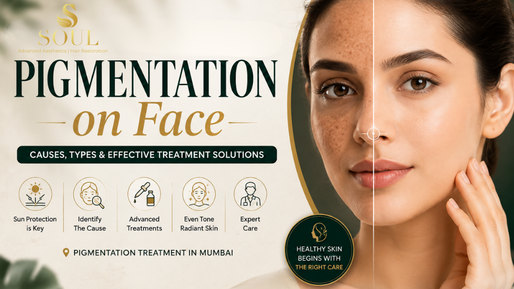
Pigmentation on face occurs when the skin produces or deposits excess melanin, leading to dark spots, patches, or an uneven skin tone. The right approach depends on the cause. Sun exposure, acne marks, hormonal changes, inflammation, ageing, and certain skin conditions can all contribute to facial pigmentation.
For many people, pigmentation develops gradually and becomes more noticeable with continued sun exposure. However, treating pigmentation on face is not simply about choosing a cream or cosmetic product. The first step is understanding what type of pigmentation you have and what may be triggering it.
At Soul Aesthetic, a personalised approach can help assess concerns such as dark spots, post-acne marks, uneven skin tone, and other visible pigmentation changes. If you are looking for treatment for pigmentation on face in Mumbai, professional guidance can help you explore options based on your skin type, pigmentation pattern, and individual concerns.
What Is Pigmentation on Face?
Pigmentation refers to changes in skin colour caused by variations in melanin, the natural pigment that gives your skin its colour. When melanin production increases or becomes uneven, darker areas may appear on the skin.
Pigmentation on face can appear as:
- Dark spots
- Brown or greyish patches
- Uneven skin tone
- Post-acne marks
- Sun spots
- Dark patches on the cheeks or forehead
- Pigmentation around certain areas of the face
The appearance, depth, and cause of pigmentation can vary from person to person. That is why one treatment may not be suitable for every type of facial pigmentation.
What Causes Pigmentation on Face?
Several factors can contribute to pigmentation on face. Identifying the trigger can help guide treatment and reduce the risk of further darkening.
1. Sun Exposure
Sun exposure is one of the most common factors behind visible pigmentation. Ultraviolet exposure can stimulate melanin production and make existing dark spots or patches appear darker.
Repeated sun exposure may also make it more difficult to manage certain pigmentation concerns. Daily sun protection is therefore an important part of managing and preventing further pigmentation.
2. Post-Inflammatory Hyperpigmentation
Dark marks can sometimes develop after inflammation or injury to the skin. Acne, skin irritation, burns, and other inflammatory conditions can leave darker marks after the original problem improves.
This is commonly seen after acne. Treating active acne and avoiding unnecessary picking or irritation can help reduce the risk of additional marks.
For patients dealing with both active breakouts and pigmentation concerns, Acne Treatment may form part of a personalised skin-care approach.
3. Hormonal Changes
Hormonal changes can contribute to certain forms of facial pigmentation, including melasma. These patches often appear on areas such as the cheeks, forehead, nose, or upper lip.
Hormonal influences can make pigmentation more persistent, which is why identifying the type of pigmentation is important before selecting a treatment approach.
4. Ageing and Cumulative Sun Exposure
Over time, repeated exposure to sunlight can contribute to the development of dark spots and uneven pigmentation.
As the skin ages, visible changes in skin tone may become more noticeable. Appropriate sun protection and professional skin care can help manage some concerns, although results depend on the type and depth of pigmentation.
5. Skin Irritation and Incorrect Product Use
Using harsh products or treatments that irritate the skin may worsen inflammation and lead to further pigmentation in some people.
Over-exfoliation, aggressive scrubbing, inappropriate chemical products, and frequent irritation can damage the skin barrier. A suitable approach to pigmentation on face should therefore consider both pigmentation reduction and overall skin health.
Different Types of Pigmentation on Face
Understanding the type of pigmentation can help determine the most suitable treatment.
Melasma
Melasma usually appears as symmetrical brown or greyish-brown patches. It commonly affects the cheeks, forehead, nose, and upper lip.
Hormonal factors and sun exposure can contribute to melasma. It can also recur or become darker with continued exposure to triggers.
Post-Acne Pigmentation
After an acne lesion heals, it may leave a darker mark behind. These marks are often different from acne scars because pigmentation mainly affects skin colour, while scars can change the skin’s texture.
Managing active acne while addressing the remaining pigmentation may provide a more complete treatment approach.
Sun Spots
Long-term sun exposure can contribute to the appearance of darker spots, particularly on areas regularly exposed to sunlight.
Uneven Skin Tone
Not all pigmentation on face appears as a clearly defined dark spot. Some people experience an overall uneven or dull-looking skin tone with darker areas in specific regions.
For concerns related to uneven complexion, you can explore Soul Aesthetic’s Uneven Skin Tone Treatment options.
How Is Pigmentation on Face Diagnosed?
The first step in treating pigmentation on face is understanding what may be causing it.
A professional assessment may consider:
- When the pigmentation first appeared
- Whether the patches are becoming darker
- Your sun exposure
- History of acne or skin inflammation
- Hormonal changes
- Current skin-care products
- Previous treatments
- Skin sensitivity
- Family or medical history where relevant
Some pigmentation changes may need medical evaluation to rule out other causes. A professional should assess new, rapidly changing, unusual, or concerning skin spots.
Pigmentation on Face Treatment Options
There is no single treatment that works for every type of pigmentation on face. The right option depends on the cause, depth, skin type, and overall condition of the skin.
Treatment may focus on reducing excess pigmentation, improving skin tone, controlling underlying triggers, and preventing new pigmentation from developing.
1. Daily Sun Protection
Sun protection is one of the most important parts of managing pigmentation on face. Without consistent protection, some pigmentation may darken again even after treatment.
A broad-spectrum sunscreen used consistently can help protect the skin from ultraviolet exposure. Reapplication may be necessary depending on your activity and sun exposure.
Sun protection should support, not replace, professional treatment when you have persistent pigmentation concerns.
2. Topical Skin Treatments
Certain topical ingredients may be used to manage hyperpigmentation. Depending on the diagnosis, a qualified professional may recommend ingredients or prescription treatments that target excess pigmentation and skin turnover.
The best topical approach depends on your skin type and the type of pigmentation. Using strong active ingredients without proper guidance can sometimes cause irritation and worsen pigmentation.
Consistency and patience are important because visible improvement may take time.
3. Chemical Peels
Appropriately selected chemical peels may be considered for some pigmentation concerns. A peel uses specific chemical agents to promote controlled exfoliation and skin renewal.
The type and strength of peel should be selected carefully based on skin type, pigmentation, and individual sensitivity. Aggressive or unsuitable treatments may increase irritation and, in some skin types, worsen pigmentation.
4. Energy-Based and Advanced Treatments
Depending on the type and depth of pigmentation, certain professional treatments may be considered as part of a personalised plan.
The suitability of advanced treatments depends on the diagnosis, skin type, pigmentation depth, and risk of side effects. Not every treatment is appropriate for every patient.
A professional should explain the expected benefits, possible risks, recovery requirements, and realistic expectations before treatment.
5. Scar and Pigmentation-Focused Care
When dark marks develop after acne or skin injury, treatment may focus on both the appearance of pigmentation and any associated textural concerns.
You can learn more about Scar & Pigmentation Treatment at Soul Aesthetic for concerns involving pigmentation and visible marks.
Can Skincare Products Remove Pigmentation on Face?
Skincare products may help improve certain forms of pigmentation on face, particularly when the pigmentation is superficial and the products are suitable for your skin.
However, results depend on several factors:
- The type of pigmentation
- How deep the pigment is
- The ingredients used
- Consistency of use
- Sun exposure
- Skin sensitivity
- Whether the underlying trigger continues
A product that works for one person may not work for another. In some cases, using multiple strong products together can irritate the skin and worsen pigmentation.
A simple, consistent routine is often more helpful than constantly changing products.
Why Sun Protection Matters During Pigmentation Treatment
Sun exposure can trigger melanin production and worsen existing pigmentation. This means that even an effective treatment plan may produce limited results if the skin continues to receive significant unprotected sun exposure.
A complete approach to pigmentation on face should therefore include:
- Daily sun protection
- Appropriate reapplication
- Protective clothing or shade when practical
- Avoiding unnecessary sun exposure during peak hours
- Following the aftercare recommended for professional treatments
Sun protection also plays an important role in maintaining treatment results over time.
How Long Does Pigmentation Treatment Take?
Treatment for pigmentation on face usually requires patience. Skin pigmentation does not disappear overnight, and the timeline depends on the type and depth of the pigmentation.
Some people may notice gradual improvement over several weeks, while more persistent pigmentation may require a longer treatment plan.
The timeline can depend on:
- The cause of pigmentation
- How deep the pigmentation is
- Your skin type
- The treatment used
- Consistency with home care
- Sun exposure
- Whether the underlying trigger continues
A realistic treatment plan should focus on gradual improvement rather than promising instant or permanent results.
Can Pigmentation on Face Come Back?
Yes. Some forms of pigmentation on face can return or darken again if the underlying trigger remains.
For example, continued sun exposure, hormonal influences, repeated inflammation, or irritation may contribute to recurring pigmentation.
This is why maintenance and prevention can be just as important as the initial treatment.
After achieving improvement, your professional may recommend an ongoing skin-care and sun-protection routine to help maintain the results.
Pigmentation on Face and Ageing: Is There a Connection?
As the skin ages, cumulative sun exposure and changes in the skin can contribute to dark spots and uneven skin tone.
Some people experience pigmentation alongside other visible signs of ageing, such as fine lines, changes in skin texture, or loss of firmness.
When pigmentation occurs alongside broader ageing concerns, a personalised Anti-Ageing Treatment plan may help address multiple skin concerns based on individual needs.
The right approach should focus on the condition of your skin rather than using the same treatment for every sign of ageing.
Why You Should Avoid DIY Treatments for Severe Pigmentation
Home remedies and strong DIY treatments can sometimes irritate the skin.
Ingredients that are too harsh, excessive exfoliation, or inappropriate use of acids can damage the skin barrier. Inflammation may then trigger additional pigmentation, particularly in people who are prone to post-inflammatory hyperpigmentation.
If you have persistent or worsening pigmentation on face, professional guidance can help you avoid unnecessary trial and error.
This is especially important when pigmentation is deep, widespread, recurrent, or associated with another skin condition.
How to Prevent Pigmentation on Face From Getting Worse
While it may not always be possible to prevent every type of pigmentation, you can reduce some common triggers.
Protect Your Skin From the Sun
Use appropriate daily sun protection and limit unnecessary direct exposure.
Avoid Picking Acne
Picking or squeezing acne can increase inflammation and raise the risk of post-acne marks.
Avoid Over-Exfoliation
Using too many exfoliating products may irritate your skin and worsen pigmentation.
Use Suitable Skin-Care Products
Choose products based on your skin type and concerns rather than following every new trend.
Treat Skin Problems Early
Managing acne, inflammation, and other skin concerns appropriately may help reduce the risk of additional pigmentation.
Why People Consider Soul Aesthetic for Pigmentation on Face
When choosing a clinic for pigmentation on face, it is important to look beyond promises of instant whitening or guaranteed permanent results.
People may consider Soul Aesthetic because of factors such as:
- Individual skin assessment: Understanding the type and possible cause of pigmentation.
- Personalised treatment planning: Selecting treatment options based on skin type, pigmentation pattern, and skin sensitivity.
- Focus on overall skin health: Managing pigmentation without unnecessarily compromising the skin barrier.
- Treatment for multiple skin concerns: Addressing pigmentation alongside acne, uneven skin tone, ageing concerns, or visible scars where appropriate.
- Realistic expectations: Understanding that pigmentation treatment often requires consistency and may take time.
- Long-term care: Including prevention and maintenance to help manage future pigmentation.
You can learn more about the clinic and its approach through About Soul Aesthetic.
Skin Treatments for Pigmentation on Face
Persistent pigmentation on face may require more than a basic home skincare routine. Depending on your assessment, a professional may recommend a treatment plan designed around your individual skin concerns.
You can explore the broader range of Skin Treatments available at Soul Aesthetic to understand the different approaches that may be considered for skin health and appearance.
The goal should always be to select treatment based on the cause and characteristics of your pigmentation rather than simply choosing the strongest available procedure.
Pigmentation on Face Treatment in Mumbai: What Should You Look For?
If you are searching for pigmentation on face treatment in Mumbai, avoid selecting a clinic based only on discounts, dramatic before-and-after images, or promises of instant results.
Ask questions such as:
- What type of pigmentation do I have?
- What may be causing it?
- Is the treatment suitable for my skin type?
- What results can I realistically expect?
- How many sessions may be required?
- What are the possible side effects?
- How should I care for my skin after treatment?
- How can I reduce the risk of pigmentation returning?
A proper consultation can help you understand which treatment approach may be suitable and what level of improvement is realistic.
When Should You See a Skin Professional?
You should consider professional evaluation if you notice:
- New or rapidly changing dark spots
- Persistent pigmentation
- Pigmentation that continues to worsen
- Dark patches after acne or inflammation
- Uneven skin tone that does not improve with basic care
- Skin irritation caused by skincare products
- Pigmentation affecting your confidence
A professional can assess the concern and help determine whether it is suitable for cosmetic treatment or whether further medical evaluation is necessary.
Conclusion
Pigmentation on face can develop for many reasons, including sun exposure, acne, inflammation, hormonal changes, ageing, and skin irritation. The most effective approach starts with identifying the type and possible cause of the pigmentation rather than using the same treatment for every dark spot or patch.
Treatment may involve consistent sun protection, suitable skincare, topical treatment, professional procedures, or a combination of approaches. The best option depends on your skin type, pigmentation pattern, and individual concerns.
If you are experiencing persistent pigmentation on face and are looking for professional skin care in Mumbai, Soul Aesthetic can help you explore personalised treatment options based on your skin concerns and goals.
To discuss your concerns and understand the available options, Contact Soul Aesthetic for a professional consultation.
FAQs
Q1. What causes pigmentation on face?
Ans. Pigmentation on face can be caused by sun exposure, acne, inflammation, hormonal changes, ageing, skin irritation, and certain medical or skin conditions.
Q2. Can pigmentation on face be removed permanently?
Ans. Some pigmentation can improve significantly, but certain types may return if triggers such as sun exposure, hormonal changes, or inflammation continue.
Q3. Which treatment is best for pigmentation on face?
Ans. The best treatment depends on the type, cause, and depth of pigmentation. A professional assessment can help determine whether skincare, topical treatment, chemical peels, or another approach may be suitable.
Q4. Can sunscreen reduce pigmentation?
Ans. Consistent sun protection can help prevent existing pigmentation from becoming darker and can support the results of other treatments.
Q5. Does acne cause pigmentation on face?
Ans. Yes. Acne can leave dark marks after the inflammation improves. These marks are commonly referred to as post-inflammatory hyperpigmentation.
Q6. How long does pigmentation treatment take?
Ans. The timeline varies depending on the type and depth of pigmentation and the treatment used. Improvement is usually gradual and may require several weeks or longer.