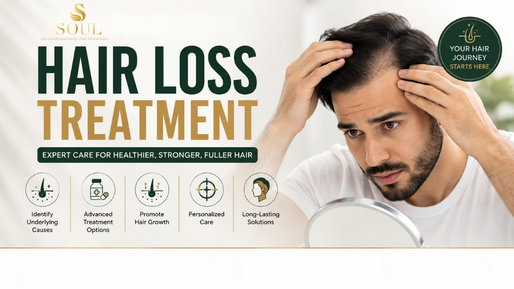
Hair loss treatment depends on the underlying cause of your hair loss. Whether you are experiencing gradual thinning, excessive shedding, a receding hairline, or patchy hair loss, the right hair loss treatment starts with identifying why the problem is happening. Depending on your condition, hair loss treatment may include medical care, scalp-focused treatment, hair regrowth solutions, lifestyle changes, or hair transplantation for suitable candidates.
Hair loss can develop due to genetics, stress, illness, nutritional deficiencies, hormonal changes, scalp conditions, medications, or damaging hair-care practices. Some types of hair loss are temporary and may improve when the underlying trigger is addressed, while others can progress over time and may require ongoing management.
At Soul Aesthetic, the approach to hair loss treatment should begin with understanding your individual hair concerns. Your hair-loss pattern, scalp condition, existing hair density, medical history, and long-term goals can all influence which treatment approach may be suitable.
If you are looking for hair loss treatment in Mumbai, a proper consultation can help you understand the possible cause of your hair loss and explore the most appropriate treatment options.
What Is Hair Loss?
Hair loss occurs when hair sheds faster than it regrows or when hair follicles gradually produce thinner, shorter, and weaker hair over time.
Losing some hair every day is part of the normal hair-growth cycle. However, you may need to consider professional advice if you notice:
- A receding hairline
- A widening hair part
- Thinning around the crown
- Excessive hair shedding
- Increased scalp visibility
- Patchy bald areas
- Reduced hair density
- Progressive thinning
The pattern and speed of hair loss can provide useful clues about its possible cause. This is why an accurate assessment is an important part of choosing the right hair loss treatment.
What Causes Hair Loss?
1. Genetic Hair Loss
Genetic or hereditary hair loss is one of the most common causes of progressive hair thinning.
In men, it may appear as a receding hairline, thinning around the temples, or hair loss around the crown. In women, it may appear as overall thinning, a widening part, or reduced density on the top of the scalp.
Because genetic hair loss can gradually progress, early hair loss treatment may help manage the condition and preserve existing hair where appropriate.
2. Stress, Illness, and Physical Changes
Significant physical or emotional stress can affect the normal hair-growth cycle.
Some people experience increased shedding after:
- A serious illness or high fever
- Surgery
- Significant weight loss
- Major stress
- Certain medical treatments
- Other major physical changes
In these situations, identifying and addressing the trigger is often an important part of hair loss treatment.
3. Nutritional Deficiencies
Hair requires adequate nutrition to support normal growth. In some cases, nutritional deficiencies can contribute to increased shedding or poor hair quality.
However, taking supplements without knowing whether you have a deficiency may not address the real problem. A professional assessment can help determine whether nutritional factors are contributing to your hair concerns.
4. Hormonal and Medical Factors
Hormonal changes and certain medical conditions can also affect the hair-growth cycle.
If an underlying medical issue contributes to hair loss, the most appropriate hair loss treatment may involve addressing that underlying cause alongside managing the hair-related symptoms.
5. Scalp Conditions
Your scalp plays an important role in supporting healthy hair growth.
Inflammation, irritation, infections, excessive scaling, and other scalp concerns can affect the condition of your hair and, in some cases, contribute to hair loss.
If you experience itching, pain, redness, inflammation, or significant scaling along with hair loss, you should seek professional evaluation.
6. Tight Hairstyles and Hair Damage
Constant tension on the hair can contribute to traction-related hair loss.
Regularly wearing very tight ponytails, buns, braids, or similar hairstyles may place unnecessary stress on the hair follicles. Excessive heat styling and harsh chemical treatments can also damage the hair shaft and increase breakage.
Reducing damaging hair practices can form an important part of hair loss treatment, particularly when hair damage or traction contributes to the problem.
How Is the Right Hair Loss Treatment Selected?
The right hair loss treatment should not begin by simply choosing a procedure, product, or trending remedy.
It should begin with understanding the cause of your hair loss.
A professional assessment may consider:
- Your pattern of hair loss
- When the hair loss started
- Whether it developed suddenly or gradually
- Your family history
- Medical history
- Diet and lifestyle
- Current medications
- Hair-care practices
- Scalp condition
- Your long-term hair goals
Depending on the situation, further evaluation may also be necessary.
This approach helps ensure that hair loss treatment addresses the actual concern instead of applying the same solution to every type of hair loss.
Hair Loss Treatment Options
There is no universal hair loss treatment that works for every person. The right approach depends on the cause, stage, severity, and pattern of your hair loss.
1. Medical Hair Loss Treatment
Certain medical treatments may help manage specific forms of hair loss.
The most appropriate option depends on factors such as the diagnosis, age, medical history, and individual circumstances. Before starting treatment, it is important to understand:
- Whether the treatment is appropriate for your condition
- Its potential benefits
- Possible limitations
- Potential side effects
- How long the treatment may take
- Whether ongoing treatment may be required
A qualified professional should guide medical hair loss treatment and help you understand realistic expectations.
2. Hair Fall Treatment
Hair fall and permanent hair loss are not always the same.
If you are experiencing excessive shedding, the first step is to understand why it is happening. Stress, illness, nutritional concerns, scalp problems, and other factors can trigger increased shedding.
For more information about treatment options and professional care, explore Soul Aesthetic’s Hair Fall Treatment page.
A suitable hair loss treatment plan should focus on identifying possible contributing factors instead of simply trying to stop visible shedding.
3. Hair Regrowth Treatment
When hair follicles remain active, treatment may focus on supporting existing hair and improving the appearance of thinning areas.
A personalized Hair Regrowth Treatment may be considered depending on the type and stage of hair loss.
Early hair loss treatment can be particularly important in progressive thinning because preserving existing hair may be as important as improving visible density.
However, results can vary depending on the underlying cause, the condition of the hair follicles, treatment consistency, and individual response.
4. Scalp Treatment
A healthy scalp can support healthy hair growth. If you experience excessive oiliness, buildup, irritation, or other scalp-related concerns, scalp-focused care may form an important part of your overall hair loss treatment plan.
A suitable Scalp Treatment can focus on your specific scalp concerns rather than applying the same approach to every person.
However, persistent inflammation, pain, significant scaling, or sudden patchy hair loss should be professionally evaluated because some scalp conditions may require targeted diagnosis and treatment.
5. Advanced Hair Treatments
Hair restoration does not always involve one single procedure. Depending on the cause and stage of thinning, a hair loss treatment plan may involve different approaches to address hair fall, reduced density, scalp concerns, or long-term hair restoration.
You can explore the different Hair Treatments available at Soul Aesthetic to understand the options that may be considered based on your individual needs.
The most suitable hair loss treatment depends on your diagnosis, the condition of your existing hair, and your long-term goals.
When Is a Hair Transplant Considered for Hair Loss?
A hair transplant may be considered as a hair loss treatment for selected candidates with suitable donor hair and certain types of permanent hair loss.
The procedure involves relocating hair follicles from an area with adequate hair growth to an area affected by thinning or baldness. However, a hair transplant is not automatically the right hair loss treatment for everyone.
Before considering a transplant, a professional should evaluate:
- The cause of hair loss
- The stability of the hair-loss pattern
- Available donor hair
- Age and future hair-loss risk
- Hair characteristics
- The area requiring coverage
- Long-term expectations
For suitable candidates, a Hair Transplant may improve coverage in areas affected by permanent hair loss. However, hereditary hair loss can continue to progress in non-transplanted hair, which makes long-term planning important.
Can You Treat Hair Loss Naturally?
Healthy lifestyle habits can support overall hair and scalp health, but natural methods are not a replacement for diagnosis when hair loss is sudden, severe, patchy, or progressive.
Useful habits may include:
- Eating a balanced diet
- Avoiding unnecessarily restrictive diets
- Managing stress
- Avoiding tight hairstyles
- Reducing excessive heat styling
- Limiting harsh chemical treatments
- Following a gentle hair-care routine
- Addressing underlying scalp or medical concerns
These habits may reduce avoidable hair damage and support healthier hair. However, genetic hair loss, autoimmune conditions, scarring conditions, and other medical causes may require targeted hair loss treatment.
The key is simple: match the hair loss treatment to the actual cause of hair loss.
How Long Does Hair Loss Treatment Take to Show Results?
Hair growth is gradual, so most hair loss treatment options do not produce immediate visible results.
The timeline can depend on:
- The cause of hair loss
- The severity and duration of thinning
- The type of treatment
- The condition of the hair follicles
- Your individual response
- Consistency with the treatment plan
For example, some treatments for pattern hair loss may require at least several months before the response can be properly assessed. Mayo Clinic notes that minoxidil may take at least six months before helping to prevent further loss or support regrowth, and continued use may be needed to maintain benefits.
This is why realistic expectations are an important part of any hair loss treatment plan.
How Do You Know if Your Hair Loss Is Getting Worse?
Instead of judging your hair from one day to another, monitor visible changes over time.
Signs that hair loss may be progressing include:
- Increased scalp visibility
- A widening hair part
- A receding hairline
- Reduced overall density
- More noticeable thinning around the crown
- Increasing bald patches
- Continued excessive shedding
Taking photographs under similar lighting and from similar angles can help you track visible changes over time.
If you notice sudden, patchy, or rapidly progressing hair loss, seek professional evaluation because sudden changes can sometimes indicate an underlying condition that requires treatment.
When Should You See a Specialist for Hair Loss?
You should consider professional advice if you experience:
- Sudden hair loss
- Patchy bald areas
- Persistent or excessive shedding
- Rapid thinning
- A noticeably receding hairline
- Hair loss with pain or itching
- Significant scalp scaling or inflammation
- Hair loss after a major health change
- Hair loss that affects your confidence or quality of life
A professional assessment can involve reviewing your diet, hair-care routine, medical and family history, and scalp. Depending on the suspected cause, further tests may also be considered.
Early evaluation can help identify the type of hair loss and guide a more appropriate hair loss treatment approach.
Why Do People Consider Soul Aesthetic for Hair Loss Treatment?
Choosing a clinic for hair loss treatment involves more than comparing prices or looking only at before-and-after photographs.
People considering Soul Aesthetic for hair loss treatment in Mumbai may look for:
- Personalized assessment: Understanding the pattern and possible cause of hair loss before recommending a treatment approach.
- Individualized planning: Considering the scalp condition, existing hair, hair-loss pattern, and personal goals.
- Multiple treatment pathways: Exploring suitable options for hair fall, hair regrowth, scalp concerns, and hair restoration.
- Focus on realistic expectations: Understanding that treatment response and timelines can vary.
- Long-term planning: Considering future hair loss rather than focusing only on immediate improvement.
- Professional guidance: Helping patients understand the potential benefits, limitations, and aftercare associated with their treatment.
At Soul Aesthetic, the goal is to help patients understand their individual concerns and explore a hair loss treatment plan based on their specific needs.
Hair Loss Treatment in Mumbai: What Should You Look For?
If you are searching for hair loss treatment in Mumbai, do not choose a clinic based only on discounts, promotional claims, or promises of guaranteed results.
Ask important questions such as:
- What may be causing my hair loss?
- Do I need a scalp or medical evaluation?
- Which hair loss treatment may be suitable for my condition?
- What are the possible benefits and limitations?
- How long may the treatment take?
- Will I need ongoing management?
- What happens if my hair loss continues?
- What follow-up care is available?
A proper consultation can help you understand whether your hair loss treatment should focus on medical management, scalp care, hair regrowth, or another suitable approach.
Conclusion
The best hair loss treatment is not one product, procedure, or home remedy that works for everyone. The right hair loss treatment depends on why your hair loss is happening.
Genetic hair loss, temporary shedding, nutritional factors, hormonal changes, scalp conditions, and other causes can require different management strategies. This is why identifying the underlying cause should come before choosing a hair loss treatment.
Depending on your individual needs, hair loss treatment may focus on managing an underlying condition, supporting existing follicles, improving scalp health, encouraging hair regrowth, or considering hair transplantation for suitable candidates.
If you are experiencing persistent thinning or excessive shedding and are looking for hair loss treatment in Mumbai, a professional assessment can help you understand your condition and explore suitable options.
At Soul Aesthetic, the focus is on creating an individualized approach based on your hair-loss pattern, scalp condition, existing hair, and long-term restoration goals.
FAQs
Q1. What is the best hair loss treatment?
Ans. The best hair loss treatment depends on the underlying cause. Options may include medical treatment, scalp care, hair-regrowth approaches, lifestyle changes, or hair transplantation for suitable candidates.
Q2. Can hair loss treatment stop hair loss permanently?
Ans. It depends on the cause. Some temporary forms of hair loss may improve when the underlying trigger is addressed, while progressive hereditary hair loss may require ongoing management.
Q3. How long does hair loss treatment take to work?
Ans. The timeline varies depending on the cause and type of hair loss treatment. Some treatments may require several months before visible improvement can be properly assessed.
Q4. Is a hair transplant the best hair loss treatment?
Ans. Not always. A hair transplant may be a suitable hair loss treatment for selected candidates with appropriate donor hair and certain forms of permanent hair loss.
Q5. Can scalp problems cause hair loss?
Ans. Yes. Some scalp conditions, infections, and inflammatory problems can affect hair growth and contribute to hair loss.
Q6. When should I seek professional help for hair loss?
Ans. You should seek professional advice if your hair loss is sudden, patchy, severe, persistent, rapidly progressing, or accompanied by symptoms such as pain, itching, redness, or significant scaling.